

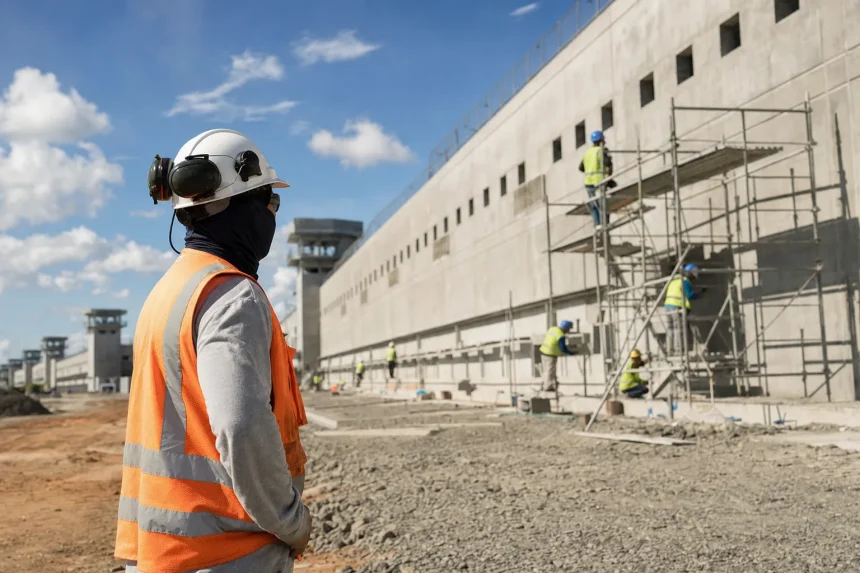
Costa Rica’s new maximum-security prison, the Centro de Alta Contención de la Criminalidad Organizada (CACCO), is nearing completion with 89% of construction finished. Located in Alajuela, about 20 kilometres from the capital, this facility aims to tackle the country’s critical prison overcrowding and enhance control over criminal networks. It is designed to accommodate over 5,000 inmates, representing roughly 25% of the nation’s total prison population.
Overview of the CACCO Project
The Centro de Alta Contención de la Criminalidad Organizada (CACCO) is a significant development in Costa Rica’s approach to managing its prison system. With construction currently at 89% completion, the facility is being built to house over 5,000 inmates classified as high-risk. This represents approximately 25% of the total prison population in the country. The project aims to alleviate severe overcrowding while also addressing the lack of control that has allowed criminal organisations to operate from within prison walls. The design incorporates advanced security features, including reinforced cells and extensive surveillance systems, to ensure that inmates cannot communicate with the outside world.
Influence of Regional Security Models
The CACCO is inspired by the prison model implemented by El Salvador’s President Nayib Bukele, particularly the Centro de Confinamiento del Terrorismo (CECOT). Costa Rica’s government has sought technical assistance from Salvadoran authorities to adapt this model to local needs. This collaboration reflects a regional trend towards stricter prison conditions as a response to rising crime rates, particularly related to drug trafficking and gang violence. Costa Rican President Laura Fernández has publicly stated that the country must stop providing resources to criminals who continue to orchestrate illegal activities from behind bars. The CACCO is seen as a critical step in severing the operational links between inmates and their criminal networks.
Expected Impact on Crime and Incarceration
The construction of the CACCO is part of a broader strategy to regain control over the penitentiary system and combat organised crime in Costa Rica. By isolating high-risk inmates in a facility designed to prevent any form of communication with the outside world, the government aims to dismantle the command structures of criminal organisations. The prison’s design features include extreme isolation, total technological lockdown to disable mobile signals, and strict internal discipline to limit inmate movement. As the project nears completion, the Costa Rican government is preparing protocols for the transfer of high-risk inmates, marking a significant shift in the country’s approach to criminal justice and public safety.
| Label | Value |
|---|---|
| Construction Progress | 89% |
| Inmate Capacity | 5,000 |
| Percentage of Total Prison Population | 25% |
| Location | Alajuela, Costa Rica |
The CACCO aims to cut off the command structures of criminal organisations operating from within prisons.
WHY IT MATTERS
The construction of the CACCO represents a significant shift in Costa Rica’s approach to prison management, aiming to enhance public safety and control over criminal activities.
Reported from infobae.com, 2026-08-27. The Tender Wire is published by Otnox.