

China Railway International, the primary contractor for Papua New Guinea’s Lae-Nadzab highway, has been urged by Prime Minister James Marape to fast-track completion of the Yalu bridge.
A direct demand on the project’s primary contractor
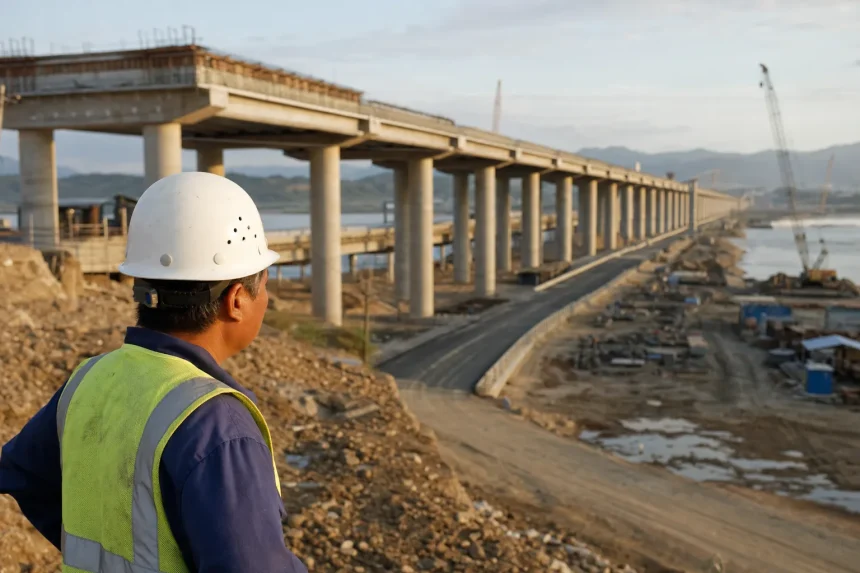
Prime Minister James Marape has put China Railway International on the spot over the pace of work on the Yalu bridge. The bridge forms part of the Lae-Nadzab highway project, for which China Railway International is identified as the primary contractor. The source report does not give a completion date, explain the current state of construction or set out any contractual sanction. Its finding is narrower: the Prime Minister has demanded that the contractor move faster and complete the bridge. That places delivery of a defined piece of public infrastructure at the centre of the government’s message to the lead supplier.
What ‘primary contractor’ means in procurement
A primary contractor is the firm appointed to take principal responsibility for delivering the contracted works. In an infrastructure project, that role commonly involves coordinating construction activity and managing delivery against the public body’s requirements, although the source does not describe China Railway International’s detailed contractual duties. A ministerial instruction to fast-track a project is therefore a direction about delivery expectations, not by itself evidence that the contract has been varied. The report does not say whether the demand changes the timetable, price, scope or remedies available under the contract.
Delivery pressure does not establish a breach
The Prime Minister’s intervention signals the government’s priority for completing the Yalu bridge, but the source does not allege that China Railway International has breached its contract. It also gives no response from the contractor and no explanation of any causes of delay. Those omissions matter for businesses and officials assessing procurement performance: a public call for faster completion can communicate urgency, while questions about responsibility and enforceability depend on the contract and verified project information. On the available account, the confirmed development is the Prime Minister’s demand, not a finding of fault.
| Fact | Details |
|---|---|
| Project | Lae-Nadzab highway |
| Infrastructure in focus | Yalu bridge |
| Primary contractor | China Railway International |
| Government figure | Prime Minister James Marape |
| Instruction | Fast-track completion of the Yalu bridge |
The confirmed development is the Prime Minister’s demand to fast-track completion, not a finding of contractual fault.
WHY IT MATTERS
When a government presses a primary contractor to accelerate a public project, the key procurement question is whether the request is a political direction, an agreed contract change or an action under existing delivery provisions. The source confirms the demand but does not establish any change to the contract.
Reported from postcourier.com.pg, 2026-09-08. The Tender Wire is published by Otnox.