

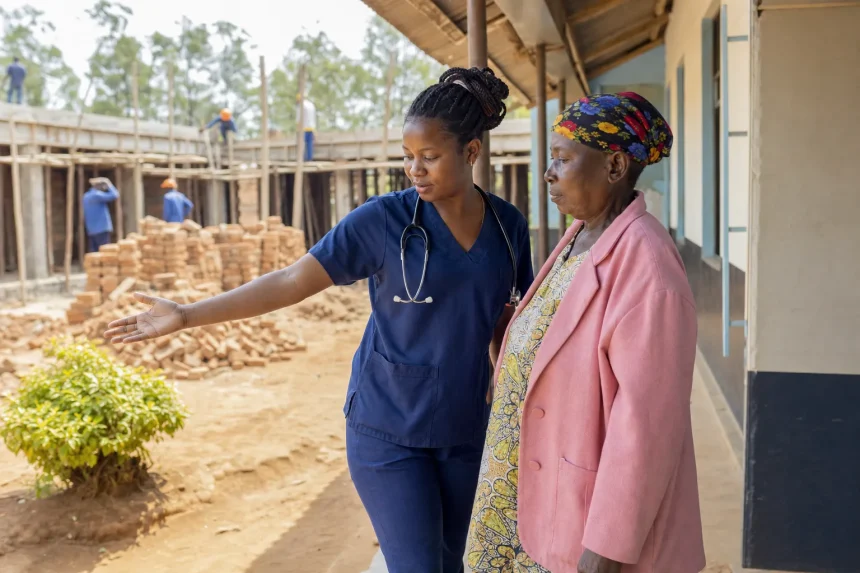
Tanzania has signed an agreement with China to expand the Jakaya Kikwete Cardiac Institute at Mloganzila, in a project intended to increase access to specialised cardiovascular care and strengthen the country’s regional medical role.
A new hospital at Mloganzila
The 112bn/- agreement will support a new 100-bed hospital at the Jakaya Kikwete Cardiac Institute’s Mloganzila site. The facility is planned to include three catheterisation laboratories and two state-of-the-art operating theatres. JKCI says the expansion will allow it to double its capacity to attend to patients and perform cardiovascular procedures. The project is therefore centred on additional clinical infrastructure, rather than a change to the institute’s existing mandate. It is intended to increase the availability of advanced cardiac treatment and surgery as Tanzania develops its position as a regional centre for specialised healthcare.
From commitments to implementation
Permanent Secretary Dr Grace Maghembe said the signing marked a move from commitments and frameworks to implementation. She described the project as a practical demonstration of commitments made during the Ninth Forum on China-Africa Cooperation, held in Beijing in September 2024. The source describes the arrangement as an agreement between Tanzania and China; it does not set out a competitive tender, the contractors, or the detailed terms for delivery. That distinction matters for procurement readers: a signed bilateral project agreement establishes the public commitment and intended implementation route, while questions about works packages, equipment supply, supervision and any subsequent contracting are not answered in the announcement.
Capacity for domestic and regional patients
JKCI currently handles an average of 250,000 patients annually, including more than 3,000 Cath Lab procedures and 800 open-heart surgeries each year. Executive Director Dr Peter Kisenge said the Mloganzila expansion would help the institute become a leading cardiac centre in East Africa and a centre of excellence for cardiovascular medicine. He linked the additional capacity to the government’s wider objective of expanding healthcare access through the Universal Health Insurance programme. The institute already serves patients from Malawi, Comoros, Kenya, Zimbabwe, Ghana, Uganda and Nigeria, according to the source.
Training and health cooperation
The planned facility is also intended to bring together patient care, specialist training, research, innovation and regional capacity building. Chinese Ambassador to Tanzania Chen Mingjian said China would continue health cooperation through medical teams, skills transfer, training and medical equipment. She described JKCI as an example of Tanzania-China cooperation and said its reputation was helping patients access specialised services closer to home. Dr Maghembe said Tanzania’s expanding specialist capacity was contributing to medical tourism, particularly among patients from East Africa and the Southern African Development Community. No claim in the announcement establishes the project’s final cost breakdown or delivery timetable.
| Fact | Detail |
|---|---|
| Agreement value | 112bn/- |
| Project location | Mloganzila |
| Planned hospital size | 100 beds |
| Cath Labs | Three |
| Operating theatres | Two |
| Current annual patient volume | An average of 250,000 patients |
| Current annual open-heart surgeries | 800 |
The increased capacity created by JKCI expansion in Mloganzila will therefore support the government’s wider objective of ensuring that more Tanzanians can access the specialised and super-specialised healthcare services they require.
WHY IT MATTERS
The agreement shows how a public healthcare expansion can combine bilateral cooperation with new clinical capacity. For suppliers and public buyers, the announcement identifies the facility and intended capabilities, but leaves the later contracting arrangements for construction, equipment and services to be clarified.
Reported from dailynews.co.tz, 2026-09-20. The Tender Wire is published by Otnox.