How does the Kutno expansion strengthen medicine supply, and what public-support mechanism helped make the investment possible?
A new production line for hospital essentials
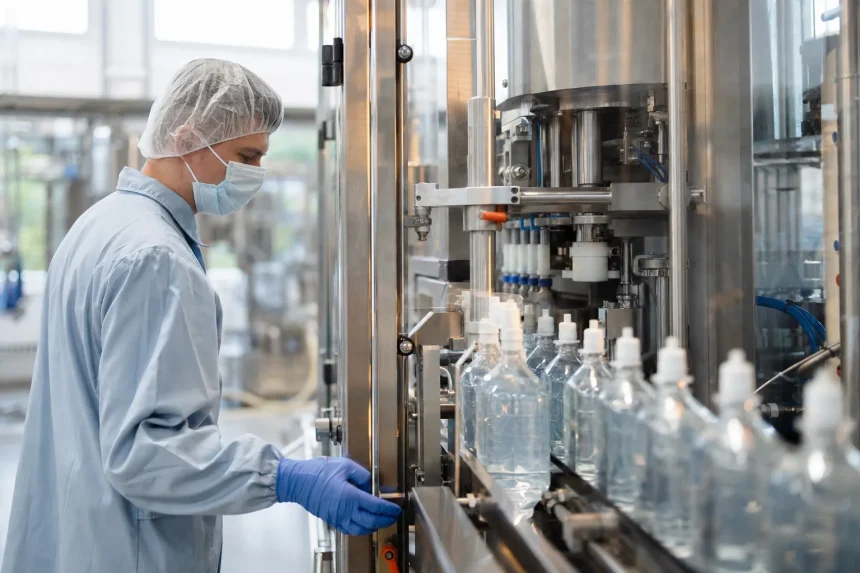
Fresenius Kabi has opened a new production line for infusion fluids at its plant in Kutno, central Poland. Construction began in 2024 and the official opening took place on 22 September. The project, valued at about 100 million złoty, is designed to increase the site’s production capacity and respond to rising demand for infusion fluids and intravenous medicines used in hospital treatment. The line uses fully automated technology. Products made in Kutno are supplied to Poland and other European countries, placing the plant within the company’s wider European manufacturing network.
The support mechanism is investment aid, not a tender
The project may receive public support of up to 40 per cent of eligible costs through the Polska Strefa Inwestycji, or Polish Investment Zone, programme. This is an investment-support mechanism rather than a public procurement procedure: it helps an eligible business carry out a qualifying project, while a tender is used by a public body to purchase goods, services or works from competing suppliers. The distinction matters for bidders and contracting authorities. Here, the public-policy question is whether support can encourage productive capacity and resilience, not how a buyer should evaluate competing offers.
Supply resilience is part of the investment case
The expansion comes as European governments and industry consider how to reduce exposure to disrupted global supply chains for critical medicines. Fresenius Kabi says that more than 90 per cent of its intravenous medicines and medical nutrition products sold in Europe are made on the continent. The company also says products from Kutno reach more than 70 countries, while its infusion fluids are supplied to more than 80 per cent of hospitals in Poland. Its stated case for local production is that shorter and more predictable supply routes can reduce the risk of shortages, alongside the need for stable regulation, infrastructure and access to inputs.
A wider European manufacturing network
Kutno has been part of Fresenius Kabi’s operations since 2000 and is one of more than 20 plants in the company’s European production network, which also includes nine research and development centres. A twin production line was developed at the same time in Isola della Scala, Italy. Fresenius Kabi employs about 2,200 people in Poland and operates two production plants there. The Kutno site holds ISO and GMP certifications, and waste from antibiotic production is managed under the BSI Kitemark standard, intended to limit the risk of antimicrobial resistance. The investment therefore combines additional capacity with established quality and environmental controls.
IN NUMBERS
The Kutno project illustrates how public investment support can sit alongside wider medicine-supply policy. Fresenius Kabi says future investment decisions will depend on market needs, skills, infrastructure, the scope for site development and a stable regulatory environment. Its position is that procurement and medicine policy should consider supply resilience and continuity alongside price. Those claims come from the company; the source does not report an independently assessed change in procurement law or prove that the new line will prevent shortages.
Reported from rp.pl, 2026-09-29. The Tender Wire is published by Otnox.