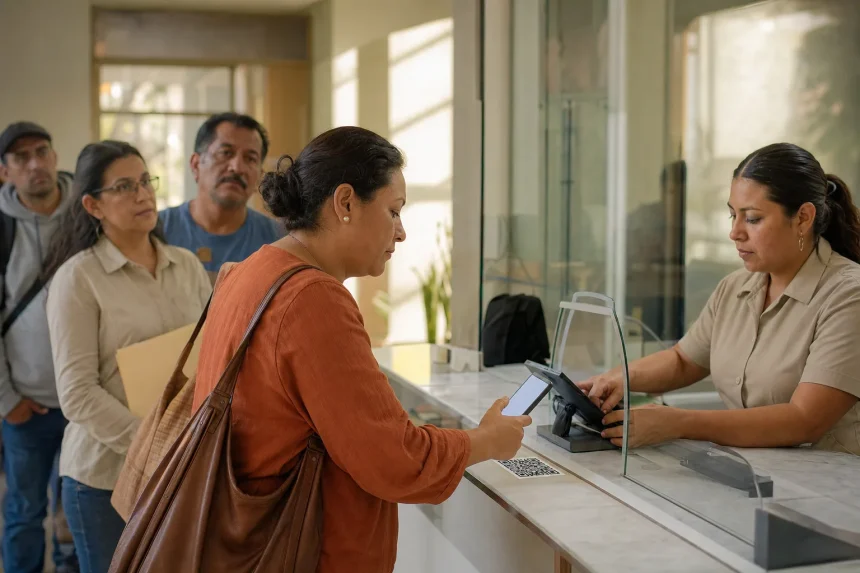
The legislation raises how public authorities, suppliers and financial-service providers will move from cash to regulated digital payments.
The law creates a designation process, not an immediate cash ban
Mexico’s Chamber of Deputies has approved the Digital Economy Law, but its passage does not yet determine which activities must stop accepting cash. The legislation gives the Ministry of Finance and Public Credit, known as SHCP, power to identify sectors and relevant activities where digital and electronic payment methods may become the only accepted option. The law therefore establishes a framework for later decisions rather than a universal prohibition on cash. Once the decree takes effect, authorities responsible for each sector will set the applicable conditions, requirements and obligations, including arrangements for a gradual transition.
Public bodies and suppliers will need compatible payment channels
Authorities at Mexico’s three levels of government will have to take the necessary steps to accept digital and electronic payment methods for the procedures and services they provide. Suppliers may implement those methods under the law and the rules issued later, but will have to provide the necessary infrastructure, tell users which options are available and adopt measures for contingencies. The recognised methods include QR codes, near-field communication, debit and credit cards, fund-transfer orders and direct debit, alongside other devices, cards or interfaces that enable payments or transfers. This makes payment capability part of how public services and related commercial operations are delivered.
Sector authorities can phase in the requirement
The legislation allows the sector authorities to establish specific mechanisms and periods for moving users and providers towards digital payments. It also recognises a limited exception when an extraordinary, unforeseen and unavoidable contingency temporarily affects infrastructure, systems, services or operations. Cash or cheques may then be used while the disruption continues, but the exception cannot become a permanent or recurring way to avoid the legal obligations. For businesses supplying public bodies, the practical issue is therefore not only whether a digital option exists, but whether the relevant sector rules define readiness, continuity and the conditions for temporary alternatives.
Remote finance and QR payments gain a clearer legal route
The bill also changes the infrastructure around financial services and payment acceptance. The Digital CURP may be used as a valid identification method for contracting financial services remotely, although users may choose other officially permitted mechanisms. A Digital Citizen File will allow people to consult and port documents and information at their request, with digital documents receiving the same legal effect as physical equivalents where current law provides for it. Separately, the Bank of Mexico may work with the National Banking and Securities Commission on rules requiring card-payment providers using point-of-sale terminals to support QR transactions, while also standardising app experiences and facilitating electronic transfers.
IN NUMBERS
The measure is not in force yet. The Chamber of Deputies sent the bill to the Senate for review. If approved in the same terms, it will go to the Executive for publication in the Official Gazette and take effect the following day. SHCP would then have 15 working days to present the sectors or activities where digital payments could be exclusive, followed by another 15 working days for the responsible sector authorities to issue their rules. Until those steps occur, the payment obligations for any particular public contract or service remain undefined by this legislation.
Reported from eleconomista.com.mx, 2026-10-07. The Tender Wire is published by Otnox.