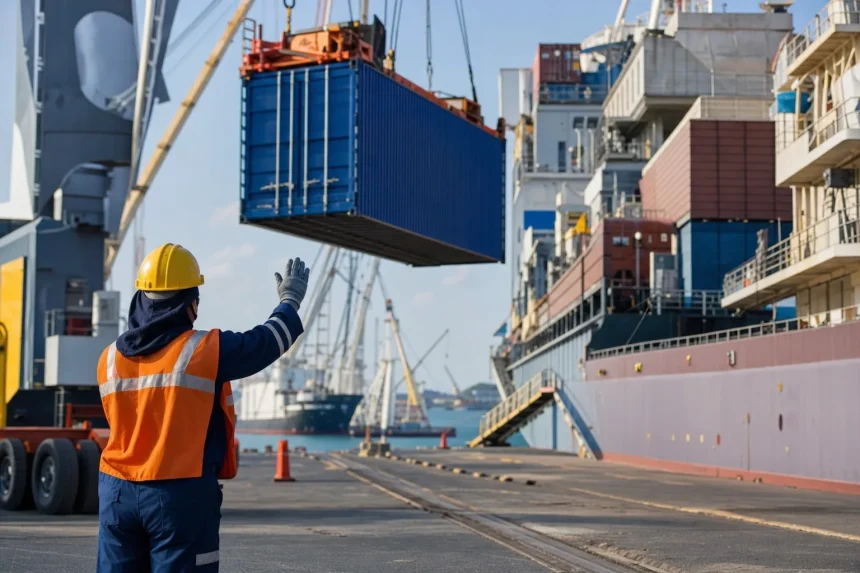
The proposal answers how Colombia would update the approval, operation and handover of port concessions while encouraging investment and widening procurement’s view of port infrastructure.
A new route for late-term investment
The decree presented by President Abelardo de la Espriella would change how Colombia approves, expands and ends port concessions, more than three decades after Law 1 of 1991 opened the country’s terminals to private investment. Its central mechanism addresses a familiar concession problem: an operator may avoid major works when a contract is close to expiry because there is too little time to recover the cost. Where five years or less remain and a proposed investment cannot be recovered before the contract ends, the concessionaire could submit it to the competent authority. If approved, the operator would receive recognition for the unrecovered residual value under terms set by the regulation. The proposal therefore links permission to invest with a defined treatment of sunk costs, rather than extending the concession automatically.
Approval would depend on a public-interest test
The proposed recognition is not automatic. The concessionaire would have to show that each investment is necessary and convenient, and the project would undergo technical, economic, social and environmental assessment before approval. That is the procurement safeguard attached to the faster investment timetable described by Transport Minister Elsa Noguera. The wider scope of eligible works would include not only quays and yards, but maritime and river access, rail connections, logistics infrastructure and roads linked to the port’s operation. In Buenaventura, the Government cited channel dredging as an access constraint that can prevent ships from entering even when the terminal itself is efficient. The mechanism treats a concession as part of a transport network, allowing related works to be considered within investment planning rather than judging the terminal in isolation.
A single register would make the concession lifecycle visible
The decree would create a single register of port concessions covering ports, quays and landing places, with each procedure traceable from the initial application through contract termination and liquidation. The aim is to digitalise processes while preserving information protected by law. The register is relevant to bidders and contracting authorities because port concessions are currently granted by several bodies, including Invias, the National Infrastructure Agency, Cormagdalena and San Andrés. The proposal also allows investment plans to include measurable projects directly connected to neighbouring communities, such as training, community infrastructure, social-impact quays, productive projects and artisanal fishing. Environmental and energy works, including quay electrification, energy efficiency, lower-emission maritime fuels and biodiversity protection, could also qualify when they exceed existing environmental obligations. On handback, assets returning to the nation would have to be in good working order, supported by inventories and valuations, so service continues during a contractual transition.
IN NUMBERS
The Government says the modernised regime is intended to foster investment, improve access competitiveness, promote sustainability and strengthen transparency. It does not remove the need for project appraisal or resolve every port bottleneck. Instead, it proposes a clearer framework for deciding which late-term investments can be recognised, which connected infrastructure can sit within a concession plan and how the State receives assets at the end. The general manager of Grupo Puerto de Cartagena, Alfonso Salas Trujillo, said changing ships, digitalisation, automation and artificial intelligence mean infrastructure decisions cannot wait. The practical test will be whether the proposed rules give authorities enough speed and scrutiny to preserve competition, public value and uninterrupted trade.
Reported from larepublica.co, 2026-10-09. The Tender Wire is published by Otnox.