

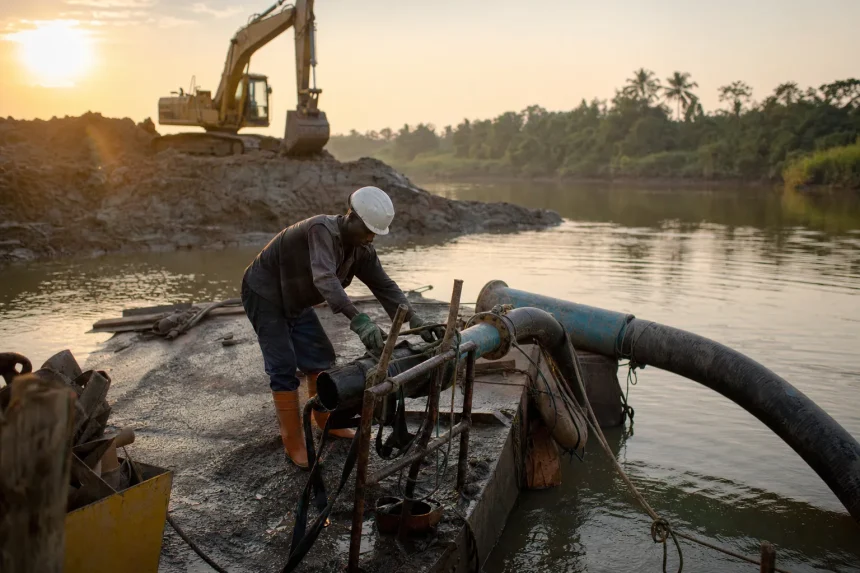
The Environmental Protection Authority has ordered projects operating without environmental permits to cease immediately across Ghana. The directive shows how a regulatory permit can act as a condition of lawful project activity, regardless of who funds the work.
The enforcement order
In a statement dated October 14, 2026, Ghana’s Environmental Protection Authority said it had observed an increasing number of reclamation, dredging and environmental restoration activities taking place without the required permits and regulatory oversight. It directed all entities undertaking those activities without an EPA Environmental Permit to cease operations immediately. The order applies nationwide and is framed as an enforcement measure rather than a change to the underlying restoration objective. The Authority said it supports efforts to repair land and water bodies damaged by illegal and irresponsible mining, but stated that urgency cannot justify bypassing safeguards intended to prevent restoration work from causing further environmental destruction.
What the permit requirement covers
The directive covers a broad set of activities: mine-site rehabilitation, backfilling excavated areas, restoration of abandoned mining sites, river dredging and desilting, and interventions affecting wetlands and aquatic ecosystems. Operators affected by the order must report to the nearest EPA Regional Office or the Authority’s Head Office for regulatory assessment. This establishes a practical sequence for projects: environmental review and permitting come before the relevant works proceed. A project’s restorative purpose does not remove that requirement, so an operator cannot treat reclamation or dredging as exempt simply because the intended result is environmental improvement.
Funding does not replace regulatory clearance
The order applies to government-sponsored, privately funded and donor-supported projects. That reach is significant for public procurement because a government mandate or public funding source does not itself constitute an EPA permit. The same regulatory condition applies to work commissioned or supported through different funding arrangements. The EPA warned that anyone continuing unpermitted operations after the notice will face action under applicable Ghanaian law. The statement does not identify particular operators or say that any named project has been found liable; it sets out a general direction to stop, report for assessment and obtain the relevant regulatory oversight before proceeding.
| Fact | Detail |
|---|---|
| Issuing authority | Environmental Protection Authority |
| Date of statement | October 14, 2026 |
| Geographic scope | Nationwide across Ghana |
| Activities covered | Reclamation, dredging and environmental restoration |
| Affected funding types | Government-sponsored, privately funded and donor-supported projects |
| Required next step | Report to the nearest EPA Regional Office or Head Office for regulatory assessment |
| Consequence of continuing | Action under applicable Ghanaian law |
Urgency cannot justify bypassing safeguards intended to prevent restoration work from causing further environmental destruction.
WHY IT MATTERS
For public bodies, suppliers and funders, the order underlines that environmental permitting is a separate compliance requirement from project sponsorship, financing or procurement. Restoration work may still require regulatory assessment before operations begin or continue.
Reported from myjoyonline.com, 2026-10-14. The Tender Wire is published by Otnox.