
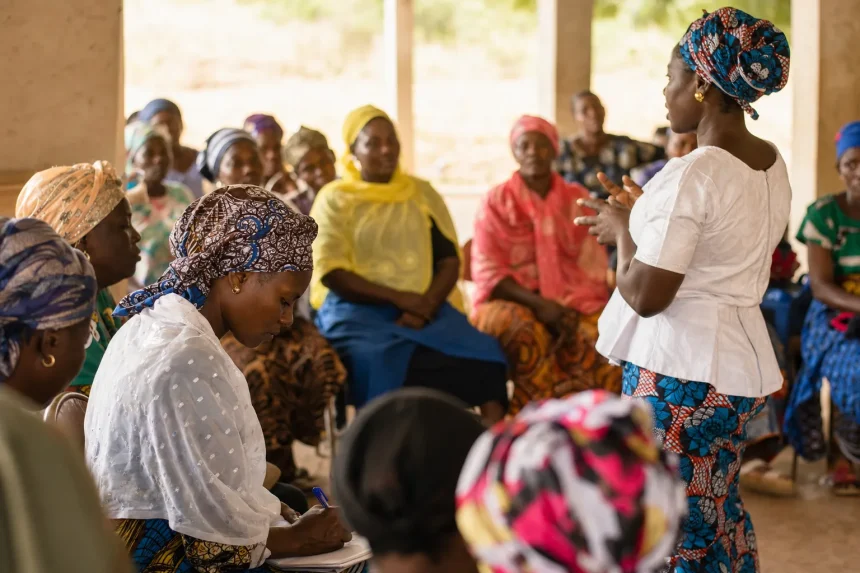
Women’s groups in Sagnarigu Municipality have been briefed on how to recognise, document and report suspected corruption, in an initiative aimed at strengthening accountability in public institutions. The engagement in Tamale focused on civic rights, reporting procedures and safer access to complaint channels.
Training focused on practical reporting
The Sagnarigu Municipal Directorate of the National Commission for Civic Education held the engagement as part of Ghana’s Strengthening the Rule of Law and the Fight Against Corruption Programme. The programme is implemented through the Participation, Accountability and Integrity for a Resilient Democracy initiative, with support from the European Union and the German Development Cooperation. NCCE Municipal Director Abdulai Soale said better knowledge of civic rights and responsibilities could give women the confidence to demand accountability from public officials and promote transparency in their communities.
Public services can expose residents to risk
Abdul-Wahab Abdul-Wasiu, an investigations officer at the Sagnarigu Municipal Directorate of the Commission on Human Rights and Administrative Justice, said women’s understanding of corruption and reporting procedures was important because of their frequent contact with public institutions. He cited schools, health facilities, the Police, local government institutions and workplaces as settings where people could encounter requests for unofficial payments or favours. He said corruption can divert resources from healthcare, education, water supply and social support programmes, affecting families and other vulnerable groups.
Evidence and safe channels matter
Participants were advised to record the dates, locations and people involved in suspected cases, as well as any payments or favours requested. Abdul-Wasiu said reports should distinguish between events personally witnessed and information received from other sources. He also encouraged the preservation of lawfully obtained evidence, including receipts, text messages, emails and other relevant documents, while warning participants to avoid actions that could compromise their safety. The guidance offers a transferable principle for complaints involving public services or contracts: clear, firsthand records can help an authorised body assess an allegation.
Access must reflect women’s circumstances
Abdul-Wasiu called for reporting mechanisms that are accessible, confidential and safe, with attention to language barriers, disability access, transport costs, childcare responsibilities and limited internet access. The request places the design of a complaint system alongside the conduct it is intended to address: a channel that is technically available may still be difficult to use in practice. Participants were encouraged to use appropriate reporting routes rather than taking unsafe action. Zelia Issah, a participant, said the initiative would support women’s involvement in governance and help keep public institutions accountable to the people they serve.
| Fact | Details |
|---|---|
| Location | Tamale, Ghana |
| Organiser | Sagnarigu Municipal Directorate of the NCCE |
| Public accountability partner | Commission on Human Rights and Administrative Justice |
| Programme | Strengthening the Rule of Law and the Fight Against Corruption in Ghana Programme |
| Implementation initiative | Participation, Accountability and Integrity for a Resilient Democracy |
| External support | European Union and German Development Cooperation |
Women should not only be viewed as victims of corruption but also as community leaders, traders, professionals, workers and citizens capable of promoting integrity.
WHY IT MATTERS
For public bodies and suppliers alike, the account shows why credible reporting systems need clear channels, preserved evidence and safeguards for people who may face barriers to access or fear reprisals. The source reports guidance and allegations of possible unofficial payments; it does not establish that any particular person or institution committed corruption.
Reported from myjoyonline.com, 2026-10-23. The Tender Wire is published by Otnox.