What would Latvia’s proposed legal changes allow border guards to do, and how would accountability work when force is used?
Committee backs revised powers
Latvia’s Saeima Defence, Interior and Corruption Prevention Committee has backed amendments prepared by the Interior Ministry and other institutions that would broaden border guards’ powers to use firearms. The committee also supported sending the changes through the urgent procedure, asking for them to be placed on the parliamentary agenda for the plenary sitting on 29 October. Several institutions had objected to the ministry’s earlier wording at a committee meeting the previous week. The ministry and other bodies then clarified the text before the committee approved the revised version. Committee support is not the same as final enactment: the amendments still require consideration by parliament.
What the proposed mechanism covers
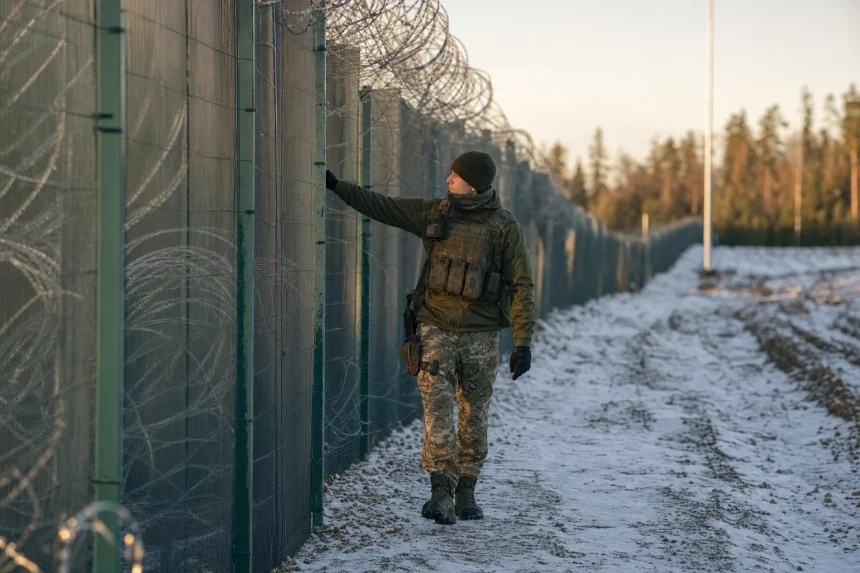
Under the version supported by the committee, a border guard performing official duties could use physical force, special combat techniques, special means and service dogs to repel an attack on a facility protected by the Border Guard or on an object forming part of state border infrastructure. The same provision would allow a firearm to be used to repel such an attack. The amendments would also permit explosives and explosive devices to prevent or stop damage to a state border infrastructure object. The proposed powers therefore link the response to an attack or damage involving a defined protected asset, rather than creating a general power to use weapons in any border incident.
Investigation and the procurement angle
The package also includes amendments to Latvia’s Criminal Procedure Law. Authorised State Border Guard officials would investigate offences committed by a border guard as a state official when those offences relate to the use of weapons, explosives, explosive devices, physical force, special combat techniques, special means or service dogs while the enhanced border-guarding system is operating. If the use of a weapon causes injury or death, the Border Guard would have to notify the prosecutor’s office immediately and no later than 24 hours afterwards. For public-contract readers, the procurement-enforcement relevance is indirect: the changes concern protection of border infrastructure and investigation of official conduct around it, not the award or performance rules of a contract.
IN NUMBERS
The proposed changes are presented as a response to damage to border infrastructure and to hybrid threats directed against the state on the Latvia-Belarus border. Their immediate significance is the combination of expanded operational powers, an urgent parliamentary route and a specified reporting and investigation framework.
Reported from pmo.ee, 2026-10-28. The Tender Wire is published by Otnox.