

Ghana’s Institute of Economic Research and Public Policy is calling for a comprehensive public account of spending and delivery under the 24-Hour Economy programme. The request centres on conflicting figures in the 2026 Budget and on the distinction between money allocated, money released and money actually spent.
A call for a complete public account
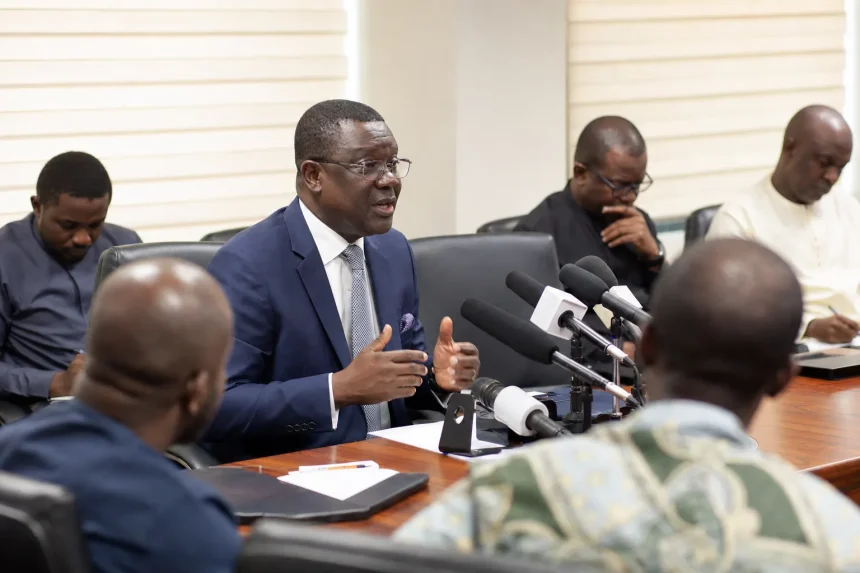
The Institute of Economic Research and Public Policy is demanding that the government publish a financing and implementation report for the 24-Hour Economy programme. The institute wants the report to set out funds disbursed, expenditure incurred and projects completed, allowing the public to compare financial commitments with measurable results. IERPP Executive Director Prof Isaac Boadi made the demand at a news conference in Accra on Tuesday, October 27. He said the government should account for its commitments and show what the flagship programme has delivered. The request places spending disclosure and implementation evidence at the centre of scrutiny.
The budget documents show different totals
Prof Boadi questioned the difference between the GH¢90 million allocation shown in the detailed expenditure tables of the 2026 Budget and the GH¢110 million cited in the Budget Speech. The tables assign GH¢70 million to goods and services and GH¢20 million to capital expenditure under the 24H+ Economy line, producing the lower total. The Budget Speech gives the higher figure. IERPP is asking the government to reconcile the documents and disclose the actual amounts released and spent. No finding of wrongdoing has been established; the issue reported is an unresolved difference between the published figures.
Why allocation, release and expenditure differ
The dispute illustrates a basic public-finance reporting mechanism that also matters when spending supports public projects or services. An allocation is a budgeted amount, but it does not show that funds have been transferred. A release indicates money made available, while expenditure records what has actually been spent. Prof Boadi summarised the distinction by saying, “An allocation is not a release, and a release is not expenditure.” The Ministry of Finance has previously described the GH¢110 million as a facilitating allocation rather than the programme’s full funding, with additional financing expected from private investors and development partners. That explanation does not, on its own, reconcile the two budget figures.
Transparency depends on implementation evidence
IERPP says the relevant financial and implementation information should be made public so that citizens can track how resources are being used and assess progress. A comprehensive account would connect the budget line to amounts released, spending incurred and projects completed, rather than treating the headline allocation as proof of delivery. The Ministry of Finance’s description of the GH¢110 million as a facilitating allocation indicates that the programme may draw on financing beyond the budget figure, but the source article does not provide details of those contributions or completed projects. The government has been urged to publish the information needed to clarify both funding and results.
| Label | Value |
|---|---|
| Programme | 24-Hour Economy |
| Detailed expenditure tables | GH¢90 million |
| Budget Speech | GH¢110 million |
| Goods and services | GH¢70 million |
| Capital expenditure | GH¢20 million |
| Location of news conference | Accra |
An allocation is not a release, and a release is not expenditure.
WHY IT MATTERS
Public spending transparency depends on distinguishing what was budgeted from what was released and spent. Publishing implementation information alongside financial figures would help the public assess whether reported resources correspond to completed projects and measurable results.
Reported from myjoyonline.com, 2026-10-28. The Tender Wire is published by Otnox.