
Romania’s government has proposed a financing route for local authorities that cannot cover the fuel needed to keep centralised heating systems operating through winter 2026-2027. The draft emergency ordinance would allow borrowing from the Ministry of Finance, bank loans and municipal guarantees for local heating companies. The proposal is based on a total funding need of approximately 300 million lei and has not been presented in the source as enacted legislation.
A liquidity measure for winter fuel purchasing
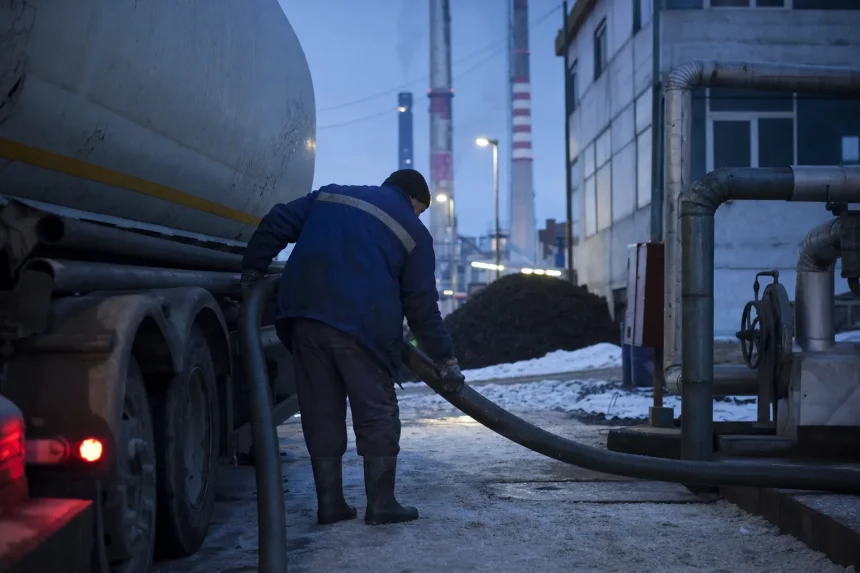
The draft says producers of thermal energy face large fuel purchases for the cold season, while limited own resources and rigid financial ceilings are creating liquidity blockages. Local authorities and economic operators have asked for a legal framework to finance the continuity of centralised public heating and the purchase of fuel. The note identifies requests from Vâlcea County, Râmnicu Vâlcea municipality, Iași, Drobeta Turnu Severin and Botoșani, with alternative financing totalling approximately 300 million lei. The government’s proposed response is borrowing rather than an immediate direct allocation for each purchase.
Three routes would support the procurement
Under the draft, municipalities could guarantee loans taken by local centralised heating companies until the end of winter. They could also take bank loans until the end of the year to buy fuel for this winter’s centralised heating systems. A third route would allow municipalities to borrow directly from the Ministry of Finance, using privatisation revenues held in the State Treasury’s general current account. The proposed facility would finance production, transport, distribution and supply of thermal energy, as well as outstanding bills and induced losses. The draft therefore changes access to working capital around the purchase, while leaving the operational need for fuel with local systems.
Terms set limits on public borrowing
The proposed Ministry of Finance loans would carry interest at three-month ROBOR plus a fixed margin of 1, 1.5 or 2 percentage points, depending on the loan’s maturity. Repayment would run from 1 to 10 years, with a 12-month grace period for principal. The overall proposed ceiling is 300 million lei. The maximum for an individual local authority would be 75 million lei or 25 million lei, depending on the number of homes served, with adjusted ceilings by unit of local government. These conditions are important for suppliers and authorities because they define the available financing envelope and the timing of repayment.
A draft, not yet a settled procurement rule
The source article describes the measure as a draft emergency ordinance consulted in draft form. It records a proposed financing framework for local authorities and heating operators, but does not say that the ordinance has been adopted or that any fuel contract has been awarded under it. For procurement professionals, the transferable point is that a borrowing facility can address a buyer’s cash-flow constraint without itself being the purchasing procedure: authorities would still need to arrange the fuel supply and manage the related public-service obligations under the applicable rules. The proposal’s immediate significance is its attempt to keep purchasing capacity available before the heating season.
| Fact | Details |
|---|---|
| Total proposed facility | 300 million lei |
| Eligible purpose | Fuel and costs for centralised heating in winter 2026-2027 |
| Interest | Three-month ROBOR plus a fixed margin of 1, 1.5 or 2 percentage points |
| Repayment period | 1-10 years |
| Grace period | 12 months on principal repayment |
| Maximum per local authority | 75 million lei or 25 million lei, depending on homes served |
The proposed facility would place up to 300 million lei within a borrowing framework for the 2026-2027 heating season.
WHY IT MATTERS
Fuel procurement for centralised heating can be disrupted when local authorities or heating operators cannot mobilise cash in time. The draft would add state-backed borrowing, municipal guarantees and bank finance to the available routes, giving buyers a defined way to fund winter requirements while setting repayment terms and authority-level ceilings.
Reported from economica.net, 2026-10-29. The Tender Wire is published by Otnox.