This piece examines how Estonia’s proposed approval of remote, automated medicine dispensing could change healthcare procurement and regulation.
A proposed regulatory change
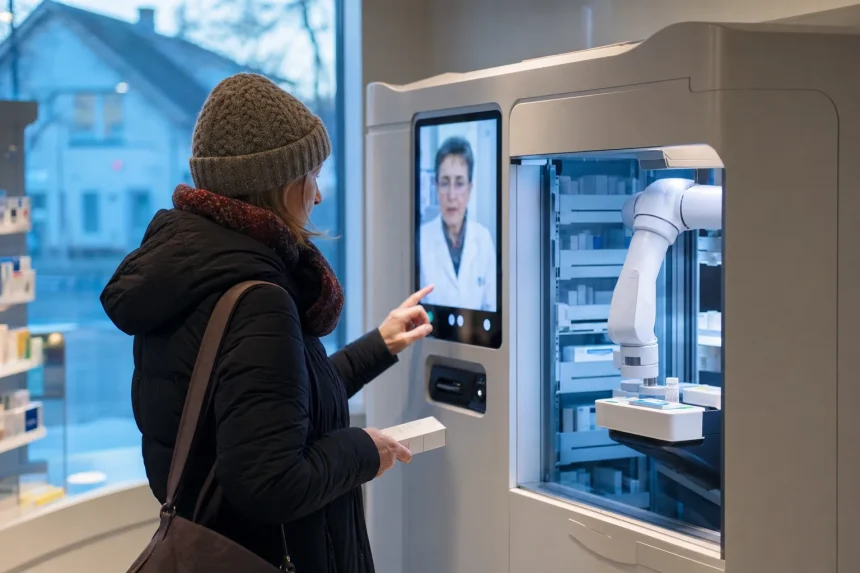
The Estonian government has approved draft amendments to the Medicinal Products Act that would allow automated pharmacies to dispense prescription and over-the-counter medicines without a pharmacist physically on site. The systems would use digital identity verification, a remote video consultation with a licensed pharmacist and robotic dispensing from a secure enclosure. Parliament must still pass the bill, with implementation targeted for 1 March 2027. If enacted, Estonia could become the first European country to permit remote prescription medicine dispensing through automated pharmacies, rather than limiting automation to collection lockers or non-prescription products.
The procurement model links technology to professional oversight
The proposed service is not a pharmacist-free model. A customer selects medicine through a touchscreen, verifies their identity and connects by video with a licensed pharmacist, who reviews the request and authorises dispensing. During Grab2Go’s six-month Estonian pilot, the pharmacist could ask about intended use and assess whether the medicine was appropriate. That division of roles matters for buyers: the technology provider supplies the hardware and software, while pharmacy operators retain responsibility for the service arrangement and professional safeguards. The legislation is intended to be technology-neutral, leaving room for competing systems.
Controlled experimentation helped resolve the legal impasse
Grab2Go spent two and a half years facing rules that required pharmacists to be physically present, while regulators wanted evidence before changing those rules. Accelerate Estonia, a government-backed innovation programme, worked with the Estonian Medicines Board and Ministry of Social Affairs to identify the necessary changes. The experience led Accelerate Estonia to develop an experimentation framework for controlled real-world trials where existing regulation would otherwise prevent testing. For public bodies, the transferable mechanism is a limited, evidence-gathering authorisation before permanent legal change, allowing safety, practicality and economic value to be assessed.
Access and workforce pressures shape the business case
The policy case extends beyond convenience. Estonia has rural communities and islands where pharmacy access can be difficult, while the impact analysis by Accelerate Estonia and PwC identified an ageing workforce: 53 per cent of pharmacists and 43 per cent of pharmaceutical technicians are over 50. Remote pharmacists could serve several locations, and automated sites could operate outside conventional opening hours. Grab2Go is targeting a return on investment of approximately two to three years for pharmacy operators, but commercial deployment remains dependent on parliamentary approval. The proposed framework may also create a market for other suppliers rather than a single-provider arrangement.
IN NUMBERS
The decision marks a significant regulatory change, but not yet a completed market opening. Parliamentary approval, implementation rules and the practical allocation of safety responsibilities will determine how pharmacies, technology suppliers and public buyers can participate. Estonia’s approach also illustrates how controlled trials can give regulators evidence without committing them to an untested permanent model.
Reported from tech.eu, 2026-11-05. The Tender Wire is published by Otnox.