
Romania’s Environment, Water and Forests Minister Natalia Intotero has criticised the handling of the Mihăileni dam project and said she may request an audit. The works were stopped after a definitive court ruling linked to inconsistencies in the environmental approval.
A court ruling stopped the project
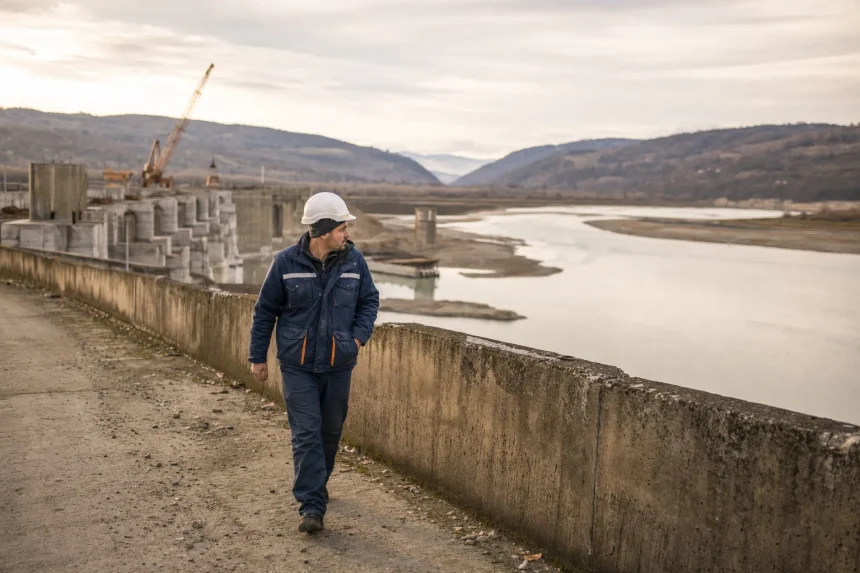
The Mihăileni hydrotechnical reservoir on the Crişul Alb river is 90% complete, according to the source article, but construction has not continued after the project lost its building authorisation. The Court of Appeal in Cluj issued a definitive ruling on 16 February in proceedings brought by an environmental association. The ruling concerned inconsistencies in the environmental approval and required the works to stop. The project began in 1987, while the dam, the high-water spillway and the operating headquarters were completed in 2022. The report does not establish wrongdoing by any organisation; it records the minister’s criticism of how the project was managed.
Minister calls for reauthorisation and possible audit
Speaking in Deva, Intotero said representatives of ABA Crişuri-Oradea had done nothing after the court sentence stopping the works. She described the situation as unacceptable for northern Hunedoara and said she would request an audit of what had happened over the years if necessary. The minister also said the investment could be reauthorised under environmental rules and brought into legal compliance. This is a regulatory route rather than an allegation that construction can simply resume: the project must first address the authorisation issue identified by the court. The source reports the minister’s statements and does not say that an audit has been opened or that its conclusions exist.
Budget timing is part of the dispute
Intotero said the reauthorisation process must be accelerated if the state is to include the required money in the 2027 budget. Her warning illustrates a practical feature of publicly funded infrastructure: a stopped project may need both regulatory clearance and a fresh or confirmed public financing decision before work can proceed. She said that if the project is not made legal by the end of the year, money cannot be included in the 2027 budget. The minister proposed state budget funding to complete Mihăileni and said Romania had lost hundreds of millions of euros in non-repayable funds that could have supported dam rehabilitation.
Other dams show the wider funding pressure
The minister said only one dam and one polder had been rehabilitated in Bihor county, arguing that support should benefit people across Romania. She cited Valea de Peşti, whose dam supplies water to 80% of the population of the Jiu Valley. The cost of rehabilitating its asphalt facing is about 10.5 million euros, and Intotero said the necessary money would have to come from the state budget. Mihăileni’s main objectives are to supply Brad and downstream communes with water, take flood flows from the slopes and protect local communities from flooding. Those public purposes explain the pressure to resolve the authorisation and funding questions, but do not remove the need to follow the applicable environmental process.
| Fact | Detail |
|---|---|
| Project location | Mihăileni, northern Hunedoara, on the Crişul Alb river |
| Completion | 90% |
| Project start | 1987 |
| Court ruling | Definitive Court of Appeal Cluj ruling on 16 February |
| 2027 budget risk | Funding cannot be included if the project is not made legal by the end of the year |
| Valea de Peşti rehabilitation | About 10.5 million euros |
| Water supplied by Valea de Peşti | 80% of the population of the Jiu Valley |
If it is not made legal by the end of the year, we will not be able to include money in the 2027 budget, Natalia Intotero said.
WHY IT MATTERS
The Mihăileni case shows how a court decision affecting an environmental or building authorisation can halt a public works project even when construction is largely complete. Before public money can be committed to completion, the authority must address the legal status of the works, secure the necessary reauthorisation and meet the budget timetable. The minister’s proposed audit is an allegation of poor management, not proof that procurement rules were breached.
Reported from digi24.ro, 2026-11-06. The Tender Wire is published by Otnox.