
The European Public Prosecutor’s Office has searched the headquarters of three Spanish railway-related bodies as part of an investigation into possible fraud in EU funding for the Madrid-Seville high-speed line. The inquiry concerns money intended for safety, signalling and communications upgrades, and remains an allegation rather than a proven finding.
Searches target three public bodies
The European Public Prosecutor’s Office said it had carried out searches at Adif, Spain’s rail infrastructure manager; the State Railway Safety Agency, known as AESF; and Spain’s Court of Auditors. The searches form part of an investigation into possible fraud connected with financing for the Madrid-Seville high-speed railway. Adif confirmed that prosecutors had attended its headquarters and said it provided all the information requested. AESF and the Court of Auditors did not immediately respond to requests for comment. The searches indicate that investigators are examining records held across infrastructure, safety and oversight bodies, but they do not by themselves establish that fraud occurred.
EU-funded upgrades are at the centre
The investigation concerns European Union funds allocated to renew and improve safety, signalling and communications systems on the line. In procurement terms, the issue is the use of earmarked public funding for defined infrastructure improvements: spending must be traceable to the work and systems the funding supports. The source does not identify a tender, supplier, contract value or specific transaction under suspicion. That distinction matters for businesses and public authorities reviewing similar projects. A search can gather evidence about how funded works were planned, awarded, delivered and recorded, while the allegation remains under examination by prosecutors.
The inquiry follows two fatal accidents
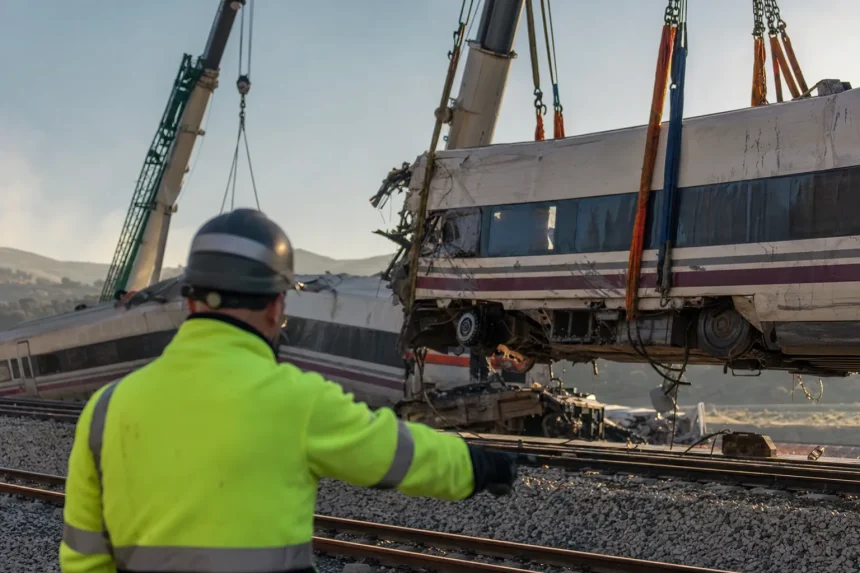
The European Public Prosecutor’s Office opened an independent investigation in March, after the first of two fatal accidents reported on the Madrid-Seville line this year. An accident in January killed 46 people, while a collision in October caused 69 deaths. The source does not state that either accident was caused by fraud, procurement failures or deficiencies in the funded systems. It does, however, place the searches against scrutiny of safety-related investment on the route. Investigators’ focus is described as possible fraud involving EU financing for renewal and improvements, rather than a finding about the causes of the collisions.
Co-operation and due process remain central
Adif’s statement that it supplied the information requested shows the immediate practical role of a public contracting body during a prosecutorial investigation: preserving access to records and responding to lawful requests. The presence of searches at the safety agency and Court of Auditors broadens the document trail beyond the infrastructure operator itself. No conclusion of wrongdoing has been announced against Adif, AESF, the Court of Auditors or any supplier. For procurement participants, the transferable point is that EU-supported rail upgrades may be examined through several public institutions, and an investigation is a fact-finding stage, not a final determination.
| Fact | Detail |
|---|---|
| Investigator | European Public Prosecutor’s Office |
| Infrastructure body searched | Adif |
| Safety body searched | State Railway Safety Agency (AESF) |
| Oversight body searched | Spain’s Court of Auditors |
| Railway line | Madrid-Seville high-speed line |
| Funding at issue | EU funds for safety, signalling and communications improvements |
| Investigation opened | March |
| Deaths reported in the two accidents | 46 in January and 69 in October |
The investigation concerns possible fraud involving EU funds intended for the renewal and improvement of safety, signalling and communications systems.
WHY IT MATTERS
The case shows how EU-funded infrastructure procurement can draw scrutiny across the delivery chain, including the infrastructure manager, safety regulator and audit body. Searches are part of an investigation and do not prove fraud.
Reported from eleconomista.com.mx, 2026-11-06. The Tender Wire is published by Otnox.