


Five things that happened to public money this week, in the order of how much of it was involved.
- €972.4M — the value tied to a single Romanian PNRR milestone — the National Biodiversity Conservation Strategy — now among twelve government decisions the PSD has asked a court to suspend. The government says the strategy must be in force by 31 August or the country faces penalties of roughly a billion euros. The party’s argument is that a cabinet removed by a no-confidence vote may only handle current administration, not adopt long-term policy.
- €62.8M — the Belate tunnels contract in Navarra, awarded in December 2023 to a joint venture of Acciona, Excavaciones Fermín Osés and Servinabar, which Spain’s Supreme Court added on Monday to the public works corruption case it is investigating. Members of the contracting panel had recorded dissenting votes at the time, noting that the scoring differences between bidders were not adequately explained. No finding has been made against any party.
- 10,000,000 — biometric identification licences Nepal is buying from the French group IN Groupe without competitive bidding, at 0.0995 euros each — the same unit price as in 2019. The Department of National Identity and Civil Registration is relying on the sole-supplier clause of the Public Procurement Act, on the grounds that the system must stay compatible with software the group’s predecessor companies have supplied since 2010.
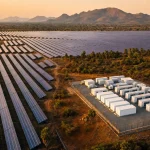
- ₹2.86 — the per-unit tariff Kerala’s regulator approved on Monday for a 25-year agreement covering 200 MW of solar and 400 MWh of storage, bought through India’s central renewable energy agency. The state board told the commission it often pays around ₹9 a unit on the power exchanges during the evening peak.
- Article 88 — the provision of Ghana’s constitution that the Deputy Attorney-General says must be amended before the country can have a genuinely independent prosecutor. The Office of the Special Prosecutor, which brings Ghana’s procurement corruption cases, was created by ordinary legislation in 2017. A Supreme Court judgment on its powers was expected on Wednesday.
The through-line, if there is one, is that four of the five are about authority rather than money: who may decide, who may prosecute, who may sign without asking anyone. The sums are what make them reportable, but the sums are not what is being contested.
Reported from Economedia, Cursdeguvernare, eldiario.es, Infobae, the Kathmandu Post, Mercom India and MyJoyOnline, 21 to 27 July 2026. The Tender Wire is published by Otnox.