What did Moldova’s review of Bălți Clinical Hospital reveal about procurement controls and the wider systems supporting public healthcare?
Review links procurement controls to wider institutional weaknesses
Moldova’s Health Ministry has completed an administrative and clinical evaluation of Bălți Clinical Hospital covering 2025–2026. It found systemic issues in procurement, infrastructure and safety, human resources and clinical organisation, while also recognising the hospital’s experienced specialists and capacity to provide multidisciplinary care in Bălți and the northern region. The ministry said those resources were not consistently supported by institutional processes that were sufficiently standardised, controlled and monitored. It has requested a corrective action plan identifying responsible officials, deadlines and verifiable indicators, shifting the response from isolated fixes towards documented institutional improvement.
Separate procedures for similar services raised a fragmentation risk
The procurement finding concerns both planning and the way needs were structured. According to the evaluation, the hospital’s planning of works for 2025 and 2026, together with the structuring of some similar services into separate procedures, created a significant risk of fragmentation or division of needs. In procurement practice, separating related requirements can make it harder to see the institution’s total demand and to assess whether the chosen procedure reflects the real scope of the requirement. The report does not state that an unlawful award was proven; it identifies a planning and control risk that the hospital is being asked to address through reorganised procurement planning.
Missing monitoring reports limited oversight of delivery
The ministry also found that the hospital had not prepared half-yearly and annual reports monitoring execution of its procurement plan and contracts. Such reports provide an internal record of whether planned purchases and signed agreements are progressing, and can help identify delays, non-performance and problems with the quality of delivery. Without them, the evaluation said, control over those issues was limited. This is a transferable lesson for contracting authorities and suppliers alike: procurement control continues after award, and planned reporting is part of the mechanism for checking whether a contract produces the expected result rather than merely recording that it was signed.
Unfinished investments and safety issues widened the concern
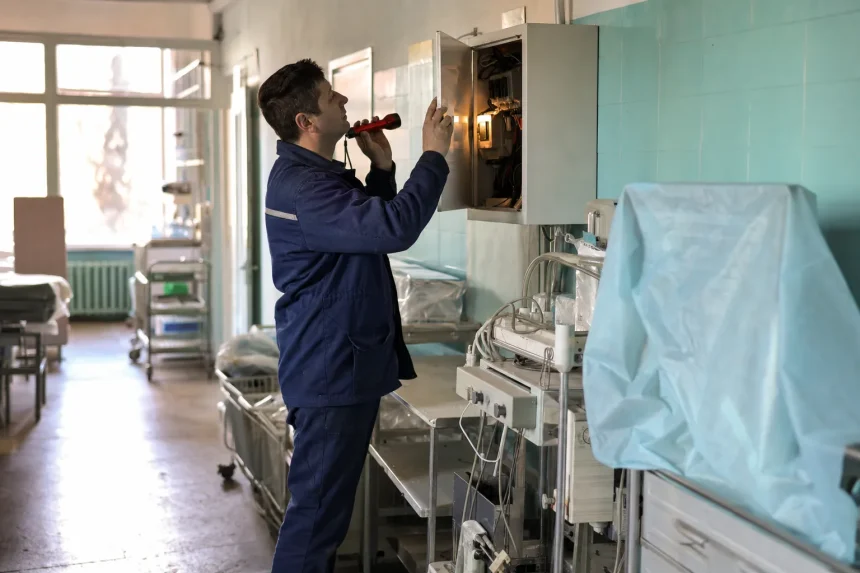
The procurement concerns appeared alongside infrastructure and patient-safety findings. A sterilisation area renovated for approximately 3.3 million lei could not be used for its intended purpose because the required electrical supply was missing, while sterilisation equipment worth approximately 2.6 million lei was not installed and was stored in a corridor at the time of the evaluation. The ministry also reported deficiencies in internal fire hydrants, missing hoses and extinguishers, undocumented checks and incomplete protection systems. In the paediatric block, six extinguishers were found across the five floors examined. The ministry will follow implementation of corrective measures.
IN NUMBERS
The requested plan is intended to address procurement planning and contract monitoring alongside safety, clinical standardisation, infrastructure and staffing. The ministry said its aim is for identified problems to be remedied systematically and verifiably, so that the hospital’s investments, professional resources and capacity support safer and more predictable services.
Reported from zdg.md, 2026-09-23. The Tender Wire is published by Otnox.