

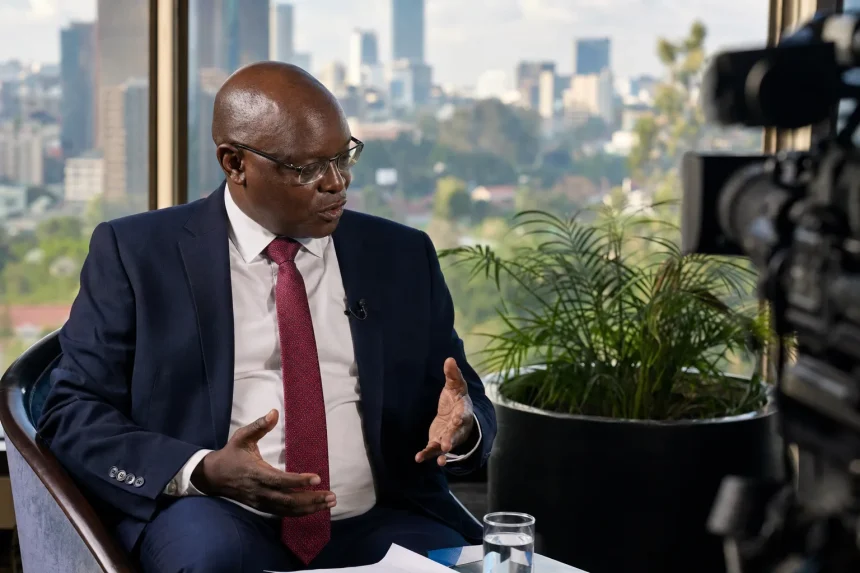
Kenya’s Controller of Budget has said her office cannot see how money collected through several government funds and levies is spent because those vehicles operate outside the Consolidated Fund. The disclosure has renewed concerns about oversight of public money, although the source reports no finding that funds have been misused.
Controller’s office says it cannot follow the money
Controller of Budget Margaret Nyakang’o said the Office of the Controller of Budget cannot track how money collected through standalone government funds is spent. She made the disclosure while speaking on Citizen TV, identifying the National Infrastructure Fund and the Sovereign Wealth Fund among the vehicles concerned. The issue is not that the funds have been shown to be unlawfully spent; rather, the national budget oversight office says it lacks visibility over their expenditure. That distinction matters for businesses and the public assessing how government financial commitments are monitored. The report gives no account of a completed investigation or proven loss, but says the disclosure has renewed fears about transparency in the administration’s multibillion-shilling financial vehicles.
Operating outside the Consolidated Fund changes oversight
The procurement and public-finance mechanism at stake is the use of standalone funds that operate outside the Consolidated Fund, described in the report as the government’s central account. Money collected through such a vehicle is not within the spending trail that the Controller of Budget says her office can follow. That does not, by itself, establish that a fund is improper. It does mean that the route from collection to expenditure is different from the route used for money held in the central account. For suppliers, taxpayers and oversight bodies, the transferable point is that the account through which public money is held can determine which institution has direct visibility over its use.
Transparency concerns extend to high-value financial vehicles
Nyakang’o’s remarks place oversight of the National Infrastructure Fund and the Sovereign Wealth Fund at the centre of a wider transparency debate. The funds and levies are described as involving billions of shillings, making the Controller’s lack of visibility significant for anyone seeking to understand how public financial vehicles support government activity. The report does not provide spending figures, procurement awards or evidence of wrongdoing, and no allegation of misuse is proven in the supplied account. Its finding is narrower: the CoB says it cannot track expenditure from these funds because they sit outside the Consolidated Fund. That gap can make scrutiny more difficult even where a fund has a legitimate policy purpose.
| Fact | Detail |
|---|---|
| Oversight office | Office of the Controller of Budget |
| Controller | Margaret Nyakang’o |
| Fund named | National Infrastructure Fund |
| Fund named | Sovereign Wealth Fund |
| Account arrangement | The funds operate outside the Consolidated Fund |
| Reported oversight gap | The CoB cannot track how money collected through the funds is spent |
The Office of the Controller of Budget cannot track how money collected through these standalone funds is spent.
WHY IT MATTERS
Public-money oversight depends partly on where funds are held and which institution can inspect their spending. A standalone vehicle may sit outside the government’s central account, leaving the Controller of Budget without the visibility she says is available for money in the Consolidated Fund. The report does not prove misuse, but it identifies a transparency gap affecting funds involving billions of shillings.
Reported from standardmedia.co.ke, 2026-09-21. The Tender Wire is published by Otnox.