

The Czech Defence Ministry is preparing a large pipeline of reconstruction and construction work for 2027, covering military bases, airfields and housing for service personnel. The programme offers substantial public-contract opportunities, but construction firms warn that labour shortages and poor timing could limit delivery.
A broad programme across the defence estate
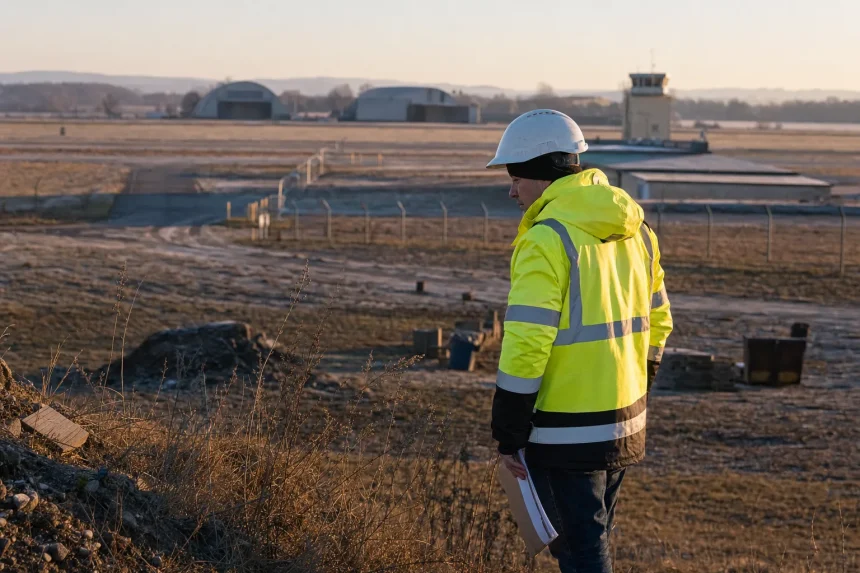
The ministry plans to spend almost 19 billion korunas in 2027 on preparing future projects, reconstructing military bases, and building new facilities and flats. The work extends beyond the modernisation of the 21st Tactical Air Force Base at Čáslav for the operation of American F-35 supersonic aircraft. It also includes a wider revitalisation of military bases and garrisons across the Czech Republic. For suppliers, this is a portfolio of capital works rather than one contract: opportunities may arise at different sites and stages, from project preparation through to construction and refurbishment.
Budget scale creates a sustained pipeline
The planned construction allocation forms part of a defence budget of 191 billion korunas, equivalent to two per cent of gross domestic product, according to the source article. The ministry describes investment in immovable infrastructure as one of the largest and most stable opportunities for Czech construction firms this decade. Its plans include almost 19 billion korunas of construction spending and 12 billion korunas for new flats, according to the article’s breakdown. The scale matters for procurement because a multi-year estate programme can give firms visibility beyond a single project, provided work is prepared and released in a manageable sequence.
Capacity, not only funding, will shape delivery
The Association of Construction Entrepreneurs says the volume of money should not overheat the sector if it is not concentrated in a short period. Its concern is that a sudden wave of tenders could increase the price of labour or materials. Firms already lack people and would need thousands of tradespeople, technicians and designers to absorb the work. That makes preparation and scheduling important procurement issues alongside the available budget. A phased programme can help buyers and suppliers plan resources, while competition may be constrained where several public projects require the same specialist skills at the same time.
| Fact | Value |
|---|---|
| Planned investment year | 2027 |
| Property reconstruction and construction | Almost 19 billion korunas |
| Defence budget | 191 billion korunas |
| Defence budget share | Two per cent of GDP |
| New flats | 12 billion korunas |
| Air base named in the programme | 21st Tactical Air Force Base at Čáslav |
Extensive investment in immovable infrastructure represents one of the largest and most stable opportunities for Czech construction firms this decade.
WHY IT MATTERS
A large public construction budget becomes a procurement pipeline only when preparation, reconstruction and new-build work are brought to market in workable packages. The Czech case also shows why supplier capacity and the timing of competitions can affect whether planned investment translates into completed projects.
Reported from e15.cz, 2026-09-14. The Tender Wire is published by Otnox.