How is the Netherlands using an open-source, modular government desktop to change the way public-sector IT is developed and procured?
A blueprint rather than a finished product
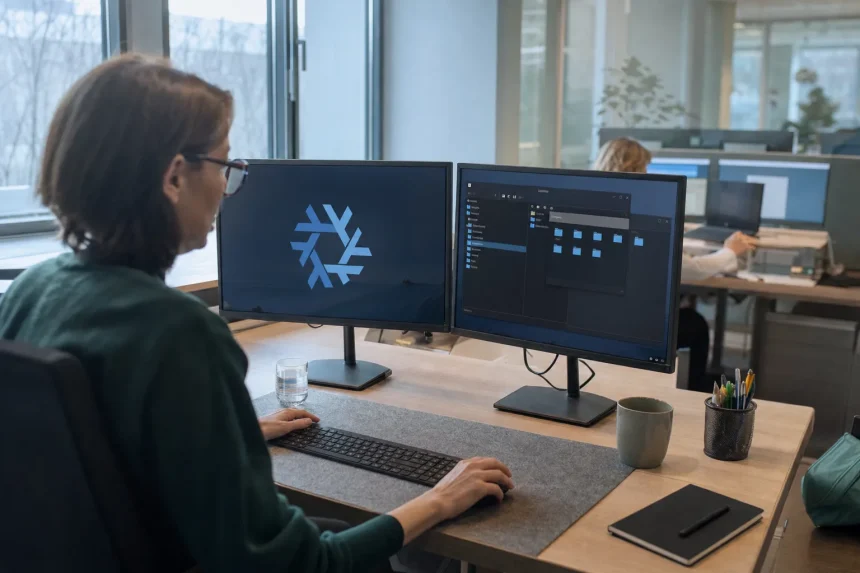
The Netherlands is developing DAWO, short for Digitaal Autonome Werkomgeving Overheid, or digital autonomous working environment for government. It is intended to provide a public-administration desktop based on free software, with NixOS selected as the operating system. DAWO is not presented as a finished product that authorities can simply buy. Instead, it is a blueprint for a complete working environment assembled from replaceable components covering the operating system, cloud infrastructure, communications, artificial intelligence and collaborative document work. The stated objective across those components is digital sovereignty: retaining greater control over the technologies used in government.
State providers are building the environment
In July 2026, the interdepartmental commission responsible for the operation of the civil service, known as the ICBR, commissioned three state IT service providers to implement the project. SSC-ICT, DICTU and DUO-ICT are developing the environment under a broader blueprint from the Ministry of the Interior. The project first tested openSUSE and Fedora for workplace computers before selecting NixOS. This is an example of public bodies commissioning implementation through designated public-sector IT providers, rather than procuring a completed proprietary desktop as a single package. For suppliers, the distinction matters: opportunities may be shaped around components, integration and compatibility with the blueprint.
Municipal testing will show how the model works
Eight municipalities are already testing DAWO in practice, organised through the Dutch municipal association VNG. That pilot phase gives the authorities a way to examine whether the modular environment can operate across local public administration before wider adoption. It also places the procurement issue beyond the choice of an operating system alone. A modular architecture can require public buyers to define how separate services work together, how components can be replaced and who remains responsible for the complete working environment. The Dutch approach therefore offers a transferable lesson for buyers considering open-source systems: the central requirement can be an adaptable, sovereign architecture rather than ownership of one finished software product.
The geopolitical trigger
The move towards greater independence from United States-based technology has a clear political backdrop. The article identifies Microsoft’s blocking of the mailbox belonging to the chief prosecutor of the International Criminal Court as one of the triggers for the Dutch initiative. That incident is presented as part of the reason for pursuing more sovereign public-sector technology, not as proof that DAWO has solved the government’s dependency risks. The Netherlands is still developing the environment, and the available account describes pilots and implementation work rather than a completed national replacement. Its significance for procurement lies in turning resilience and control into design requirements from the start.
IN NUMBERS
DAWO shows how an open-source strategy can alter public IT purchasing: the state defines a modular architecture and commissions its own providers to assemble and test it, rather than treating a desktop as a single finished product.
Reported from t3n.de, 2026-10-18. The Tender Wire is published by Otnox.