
Estonia has agreed to return €9.5m in Danish donor funding linked to an unsuccessful ammunition procurement for Ukraine, according to Denmark’s defence minister Jeppe Bruus. The case illustrates how advance payments, donor conditions and cross-border recovery proceedings can transfer procurement risk between governments.
Payment made, usable ammunition not delivered
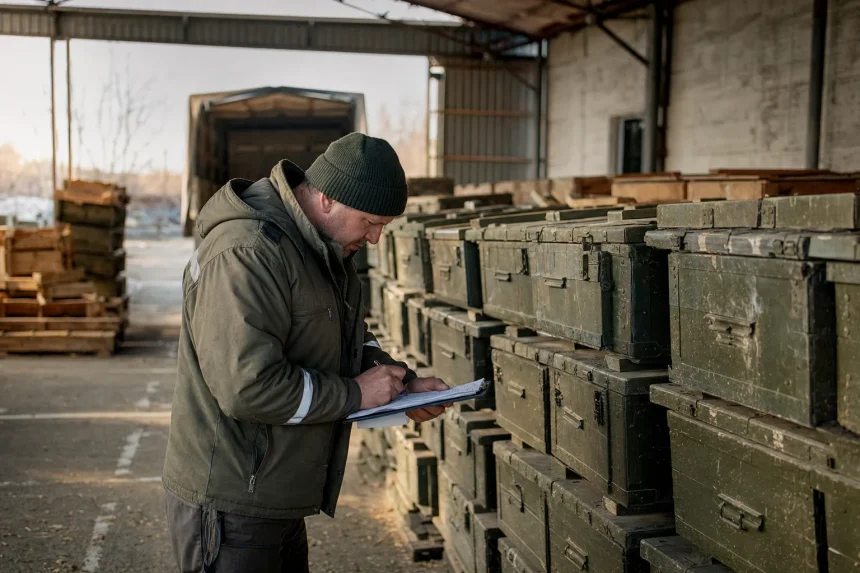
Denmark awarded Estonia €42m last April to buy artillery shells for Ukraine. Estonia paid €9.5m of that allocation to Datasel, an Italian company with Indian capital, but did not receive usable ammunition, according to the source report. The Defence Investment Centre, known as RKIK, paid €71.6m in advances to Datasel and two other companies, using money from the European Peace Facility as well as donations from Denmark and the Netherlands. Information held by the Estonian newspaper Postimees indicates that the €9.5m paid to Datasel came from Denmark, while a separate €5m advance to another company came from Dutch funds.
Donor funding creates a repayment obligation
Danish Defence Minister Jeppe Bruus told investigative publication Danwatch that Estonia had promised to repay 71m Danish kroner, or €9.5m, from the lost donor funds. He said Denmark and Estonia remained in close and constructive dialogue and that the money intended as a donation would be returned, with most of it being repaid. The arrangement shows the practical effect of intergovernmental funding agreements: the purchasing state may conduct the transaction, but the donor can retain a contractual right to repayment if the funds are not recovered or the agreement expires. Estonia’s procurement officials have asked donor countries whether they will wait for the litigation to conclude.
Recovery depends on proceedings and contract terms
Proceedings between the Estonian state and Datasel are under way in Estonia and before an arbitration court in Switzerland. Estonia remains optimistic that it can prevail and recover the advance payment, as well as a contractual penalty of €7.6m and €1.1m for warehouse rent in Romania, where Datasel’s unusable ammunition is currently stored. Bruus declined to discuss the matter in greater detail because the legal proceedings are continuing. Estonia’s position is therefore not a completed recovery: the sums sought remain connected to unresolved litigation and arbitration, and nothing in the source establishes that the claims have been proven.
Budget exposure could affect Ukraine support
The intergovernmental agreements will expire this year. RKIK deputy director general for procurement Asko Kivinuks said Estonia would have to repay donor money immediately when its agreement ended if donors did not agree to wait, creating a possible €14.5m charge to the Estonian budget. Defence Minister Martin Herem said the ministry would cover that cost from funds intended for support to Ukraine if the risk materialised. Estonia plans military assistance equal to at least 0.25% of gross domestic product annually; this year’s amount is €110.7m, with a similar sum planned for 2027. The source says repayment could put that procurement initiative at risk.
| Fact | Value |
|---|---|
| Danish allocation to Estonia | €42m |
| Payment to Datasel from Danish funds | €9.5m |
| Total advances by RKIK to three companies | €71.6m |
| Potential repayment to Denmark | 71m Danish kroner, or €9.5m |
| Potential contractual penalty | €7.6m |
| Potential Romanian warehouse claim | €1.1m |
| Possible advances repayment to donor states | €14.5m |
Estonia has promised to repay the €9.5m in Danish donor funds, while recovery from Datasel remains subject to proceedings in Estonia and Switzerland.
WHY IT MATTERS
Advance payment can accelerate the supply of military equipment, but it also places recovery risk on the purchasing state when goods are not delivered or are unusable. Where donor money is governed by intergovernmental agreements, the state running the procurement may have to repay the donor before litigation against the supplier is resolved. Clear advance-payment protections, delivery checks and repayment terms can therefore affect both public finances and the continuity of defence supply.
Reported from pmo.ee, 2026-10-30. The Tender Wire is published by Otnox.