

The planned construction of three 160-bed regional referral hospitals in Ghana’s Oti, Savannah and Western North regions has exposed a question of public investment sequencing: whether new regional facilities should proceed while some district hospitals under the previous administration’s Agenda 111 programme remain incomplete.
Three hospitals target gaps in specialist access
The Health Ministry says the three planned hospitals are intended to bring specialist care closer to residents and reduce the need to travel long distances for advanced treatment. The proposed Oti Regional Referral Hospital is expected to provide secondary and tertiary healthcare services within the region, reducing pressure on residents who currently travel to Accra for specialised treatment. The projects therefore sit at the regional level of Ghana’s healthcare network, above district facilities and health posts. Their stated purpose is not simply to add beds, but to provide a higher level of care closer to communities in regions identified by the ministry as having access gaps.
Criticism centres on unfinished district projects
The plans have drawn scrutiny from former Health Minister and Greater Accra Regional Chairman of the New Patriotic Party, Dr Bernard Okoe Boye. He questioned why government was undertaking new regional hospital projects while several facilities from the previous administration’s Agenda 111 programme remained incomplete. Dr Okoe Boye argued that resources earmarked for the three regional hospitals could instead be used to complete a number of stalled district hospital projects. His position presents the issue as a choice about sequencing scarce public capital between facilities that would deliver regional referral care and projects intended to strengthen healthcare provision at district level. Nothing in the report establishes that either approach has been shown to be the better value.
The ministry describes parallel investment
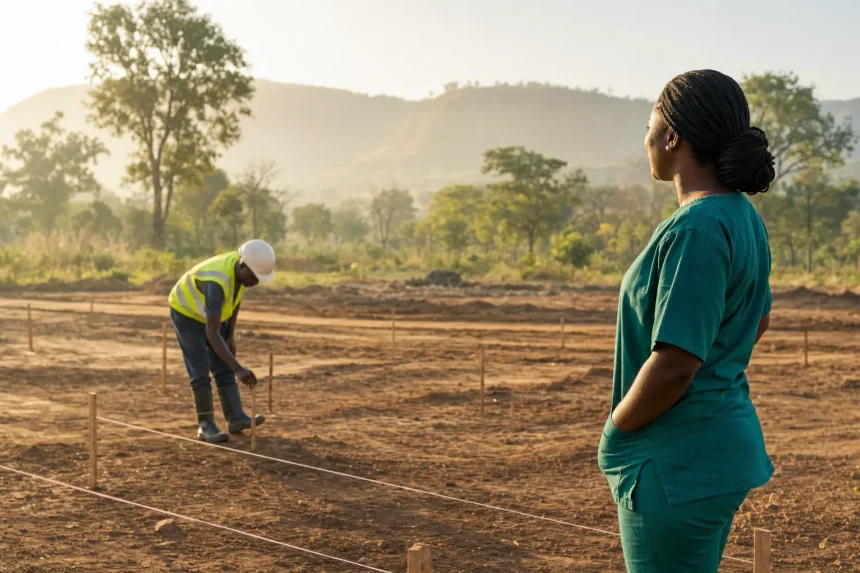
The Health Ministry rejects the suggestion that regional hospitals are being built at the expense of basic healthcare services. Spokesperson Tony Goodman said the two interventions were not mutually exclusive, pointing to investments in peripheral infrastructure, including health posts and accommodation for District Health Management teams. He said a team was in Oti planting a health post to augment the existing network. The procurement lesson is that a public healthcare programme can contain several layers of provision: regional referral hospitals for secondary and tertiary services, district facilities, and smaller health posts. The source does not set out the tendering, contract award or funding arrangements for any of these projects, so those mechanisms cannot be assessed from the available information.
Needs assessment is the stated basis for Oti
Speaking on Citi FM on September 24, 2026, Mr Goodman said an assessment of healthcare needs in Oti had informed the decision to add a regional hospital to the existing network. He said the assessment identified a regional hospital as the intervention most likely to provide quality care without requiring residents to travel from Oti to Accra. The ministry also says the project is consistent with a commitment made by the previous New Patriotic Party administration to provide such a facility for Oti. The immediate public-interest test will therefore be whether the planned investment addresses the assessed referral gap while work on lower-level infrastructure continues, rather than whether one level of facility can replace the other.
| Fact | Detail |
|---|---|
| Planned hospitals | Three 160-bed regional referral hospitals |
| Regions | Oti, Savannah and Western North |
| Oti hospital services | Secondary and tertiary healthcare |
| Stated objective | Reduce travel to Accra for specialised treatment |
| Other infrastructure | Health posts and accommodation for District Health Management teams |
| Programme under scrutiny | Agenda 111 district hospital projects |
The need for regional-level facilities remains even as work continues on lower-level healthcare infrastructure.
WHY IT MATTERS
The decision illustrates a recurring public procurement challenge: how to sequence investment across different levels of service. Regional referral hospitals may address specialist-care gaps, while district hospitals and health posts support access closer to communities. The Health Ministry says both strands can proceed, but the source provides no project costs, delivery timetable or contract details.
Reported from myjoyonline.com, 2026-09-25. The Tender Wire is published by Otnox.