
Ghana’s National Road Safety Authority has directed the Ghana Highway Authority and the Department of Urban Roads to carry out urgent remedial works on road infrastructure. The instruction links the condition of traffic lights, signs and road markings to the operation of TraffiTech-GH, a digital traffic monitoring and enforcement system that commenced operation on November 1.
Directive links enforcement to road readiness
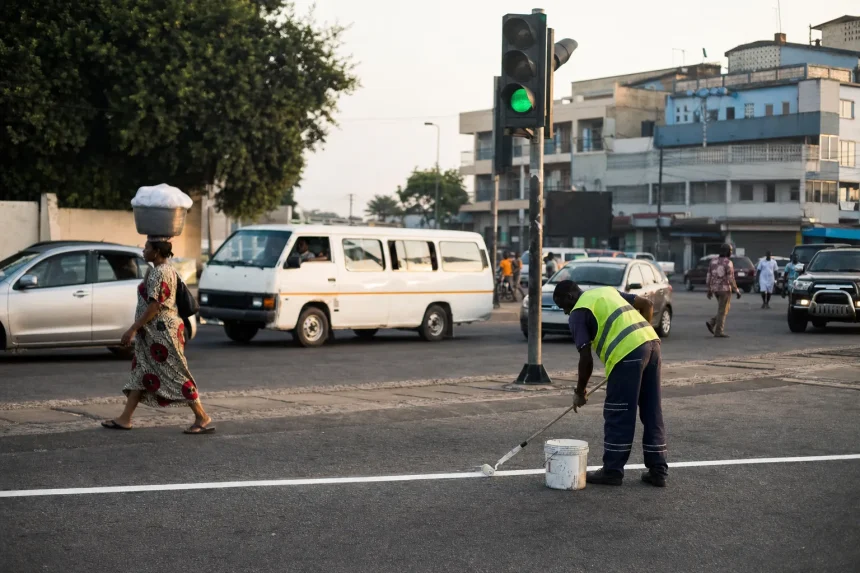
In a letter dated November 3, 2026, the NRSA told the two road sector agencies to repair faulty traffic lights, replace missing or damaged signs and restore faded or absent road markings. The Authority said malfunctioning lights, including signals that remain off or flicker, can confuse drivers and increase the risk of collisions at intersections. It also raised concerns about illegible signage and poor road furniture. The directive identifies these defects as a practical risk to motorists, pedestrians and other road users, while arguing that they could also undermine the effectiveness of TraffiTech-GH. The Authority said the system depends on functional road infrastructure and compliant road furniture.
The public procurement mechanism at stake
The instruction concerns the public delivery of remedial services and works by agencies responsible for roads. Its requirements provide a usable scope: traffic lights must be repaired or replaced, damaged or missing signs restored, and faded markings repainted. The NRSA has also asked the agencies to prioritise high-risk locations, provide timelines for completion and ensure that road furniture is functional and meets required standards. These elements are important in public procurement because they define what must be delivered, where urgency applies, when completion is expected and how performance can be assessed. The source does not identify a tender, contractor or award; it records an agency directive to organise and complete the works.
Compliance monitoring may follow
The NRSA said it would not treat the matter as a routine request because TraffiTech-GH had already begun operation. Its Regulations, Inspections and Compliance Directorate will monitor the agencies’ response and could issue formal compliance notices if they fail to act in line with the Authority’s mandate. NRSA Director-General Abraham Amaliba separately confirmed on Joy FM’s Super Morning Show that he had written to the agencies on November 3 about road markings and street lighting. He said the law allows him to go to court against them if they do not take steps to fix the problems. The source reports no court action or finding against either agency.
Infrastructure becomes part of enforcement design
The case shows why a technology-led enforcement programme can depend on earlier or parallel public works. TraffiTech-GH is intended to improve compliance with road traffic regulations and promote safer driving, but the NRSA said absent signs, unusable signals and unclear markings could frustrate enforcement and make compliance harder to secure. The road agencies have therefore been asked to support the programme through work under their existing responsibilities. For businesses that provide traffic infrastructure services, the identified needs point to distinct areas of delivery, including signal repair or replacement, sign restoration and road-marking work. Any future procurement would still need its own published requirements and procedure; the article gives no details of one.
| Fact | Details |
|---|---|
| Issuing authority | National Road Safety Authority |
| Recipients | Ghana Highway Authority and Department of Urban Roads |
| Letter date | November 3, 2026 |
| TraffiTech-GH operation | Commenced operation on November 1 |
| Required works | Repair or replace traffic lights, restore signs and repaint road markings |
| Monitoring body | NRSA Regulations, Inspections and Compliance Directorate |
This technology-driven enforcement and monitoring system depends on functional road infrastructure and compliant road furniture.
WHY IT MATTERS
A public enforcement system cannot be separated from the road infrastructure that gives drivers instructions. For procurement teams and suppliers, the directive illustrates how a programme can create connected requirements for repair, replacement, marking, timelines, standards and performance monitoring, even where no tender or contractor has yet been identified.
Reported from myjoyonline.com, 2026-11-04. The Tender Wire is published by Otnox.