

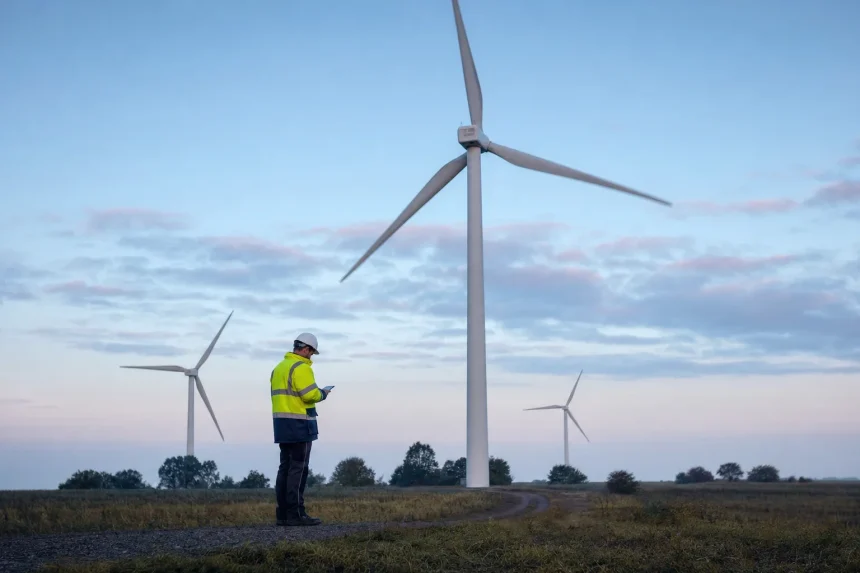
Lithuanian electricity transmission operator Litgrid has signed a 10-year contract with renewable energy company Joreta for electricity produced at its wind farm. The agreement is worth €62.49m excluding VAT and covers purchases of up to 100,000 megawatt-hours a year.
A long-term purchase from a named wind generator
Litgrid has agreed to buy electricity generated by Joreta’s wind farm under a contract valued at €62.49m excluding VAT over 10 years. Joreta is a renewable energy company controlled by E Energija. The arrangement is therefore a direct, long-term purchase agreement between the electricity transmission operator and a named generator, rather than a one-off acquisition of power. Litgrid’s shareholders approved the company board’s proposal to sign the contract. The source does not describe a tender, framework competition or other selection procedure, so the available information establishes the agreement and its approval, but not how Joreta was selected.
How the quantity and price work
The contract provides for purchases of up to 100,000 megawatt-hours of electricity per year, at €62.49 per megawatt-hour. Over the stated 10-year term, the maximum annual quantity and the unit price correspond to the reported contract value. The word “up to” is important: it sets a ceiling on the quantity that may be purchased each year, rather than stating that the full amount will necessarily be delivered annually. For suppliers and buyers, this type of structure links a multi-year commercial relationship to a defined energy source, a unit price and a maximum volume, giving the parties a clearer basis for planning than individual market purchases alone.
The procurement need comes from grid losses
Litgrid says electricity transmission creates technological losses, which the company must compensate for by acquiring the necessary electricity in the market. The contract is intended to meet that operational requirement while sourcing power from a wind farm. Donatas Matelionis, head of Litgrid’s System Management Department, said long-term green-energy contracts can reduce operational emissions and help manage the risk of electricity price fluctuations. Those are the company’s stated reasons for the purchase; the source does not provide a forecast of savings, an emissions figure or evidence of the contract’s eventual performance.
What the agreement signals for energy buying
The transaction is significant because it combines a substantial contract value with a 10-year term and a recurring annual electricity volume. It also shows how an electricity network operator can use a long-term purchase agreement to cover a defined technical need, rather than relying solely on shorter-term market purchases. The buyer is Litgrid, the generator is Joreta, and the energy is to come from a wind farm. The published information identifies the commercial terms and the shareholder approval, but gives no further detail on delivery scheduling, remedies, competing bids or other contractual conditions.
| Fact | Detail |
|---|---|
| Buyer | Litgrid |
| Supplier | Joreta, controlled by E Energija |
| Contract value | €62.49m excluding VAT |
| Term | 10 years |
| Maximum annual volume | 100,000 MWh |
| Price | €62.49 per MWh |
| Energy source | Joreta’s wind farm |
Long-term green-energy contracts allow Litgrid to manage electricity price fluctuation risk, the company said.
WHY IT MATTERS
The agreement illustrates a long-term electricity purchasing mechanism: a buyer specifies a renewable source, a maximum annual volume, a unit price and a contract term to cover an identified grid requirement.
Reported from 15min.lt, 2026-10-16. The Tender Wire is published by Otnox.