

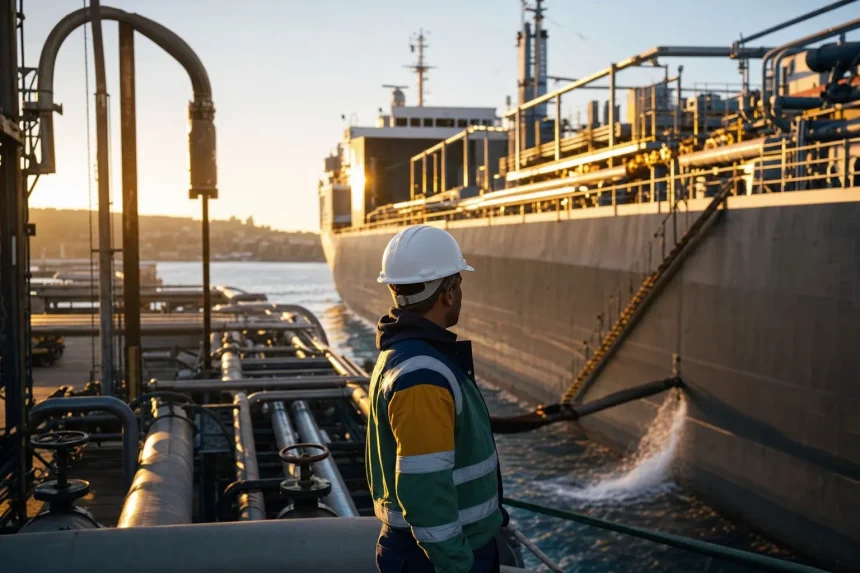
A settlement intended to reconcile debts between PetroSA and Nako Energy has instead exposed the state-owned fuel company to a liquidation application and a potentially much larger liability. The arrangement combined a debt acknowledgement with a commitment to buy further petrol cargoes, allowing Nako to cede PetroSA’s acknowledgement to lenders. PetroSA says it is considering the application and obtaining legal advice.
A debt settlement that changed the balance
When PetroSA and Nako met at PetroSA’s Parow head office in May 2025, the state-owned company appeared to hold the stronger position. PetroSA owed Nako R605-million for petrol bought in June 2024, while Nako owed PetroSA R832-million for diesel it had bought and not paid for, leaving PetroSA R227-million ahead. The reported settlement reversed that advantage. PetroSA agreed to buy 11 further cargoes of unleaded petrol at a discount of 45c per litre. After PetroSA sold 505 million litres, the R227-million balance would be recovered and Nako’s debt eliminated. The arrangement was presented as a commercial settlement and repayment plan.
How the acknowledgement was ceded
The central procurement and financing mechanism was the acknowledgement of debt. PetroSA appears to have treated the document as part of a bilateral compromise, with opposing obligations expected to cancel one another out. Nako then ceded that acknowledgement to lenders who were seeking payment for the same fuel shipment, according to the report. In a cession, a creditor transfers its contractual claim to another party, which can then seek payment directly. That distinction matters in any settlement: a document signed to resolve a dispute may create an enforceable asset for a third party if its transfer is permitted. The report describes the result as a bait-and-switch, but no court has made a finding on that characterisation.
The fuel deal behind the dispute
The settlement followed an earlier trading relationship that began with an unusually attractive offer from Nako: unleaded petrol at 50c below the government-determined basic fuel price. PetroSA agreed to a six-month trial, automatically renewable for another two years if successful, with a potential value of R11-billion. Later testing found high levels of N-methylaniline, or NMA, an additive that can raise octane but can also accelerate gum formation and damage engines. The report says the fuel was linked to complaints about stains on vehicle paintwork, while PetroSA’s internal investigation found that some cars required repainting. NMA is not banned or tested for under South Africa’s fuel standards, according to the report.
Liquidation application and the public stake
PetroSA’s exposure grew after it agreed to make R150-million prepayments on each cargo and issued an irrevocable and unconditional undertaking to pay Nako and its UAE-based supplier, Blue Ocean, within 30 days of delivery. The third cargo arrived in June 2024, but half the money reportedly remained outstanding two years later. A memo apparently sent by acting CEO Nombulelo Tyandela said Nako approached the Western Cape Division of the High Court on 11 September for an order placing PetroSA under provisional liquidation. PetroSA confirmed it was considering the application and seeking legal advice. Its reported alternative is legislation that would transfer its debts to a new taxpayer-funded state-owned enterprise. PetroSA declined detailed questions and Nako did not respond.
| Fact | Value |
|---|---|
| PetroSA’s net position before settlement | R227-million owed to PetroSA |
| Petrol debt owed by PetroSA to Nako | R605-million |
| Diesel debt owed by Nako to PetroSA | R832-million |
| Further petrol cargoes agreed | 11 |
| Fuel discount in settlement | 45c per litre |
| Fuel volume linked to repayment | 505 million litres |
| Potential loss described in report | R1.4-billion |
PetroSA should have had a R227-million upper hand. Instead, it faces the possibility of losing R1.4-billion.
WHY IT MATTERS
For public buyers and bidders, the case shows why a settlement needs more than a headline debt calculation. Payment undertakings, prepayments and cessions can alter who controls a claim and who can demand payment. Procurement teams also need to test product specifications, downstream acceptance and third-party rights before converting a disputed transaction into a new purchase commitment.
Reported from dailymaverick.co.za, 2026-09-17. The Tender Wire is published by Otnox.