

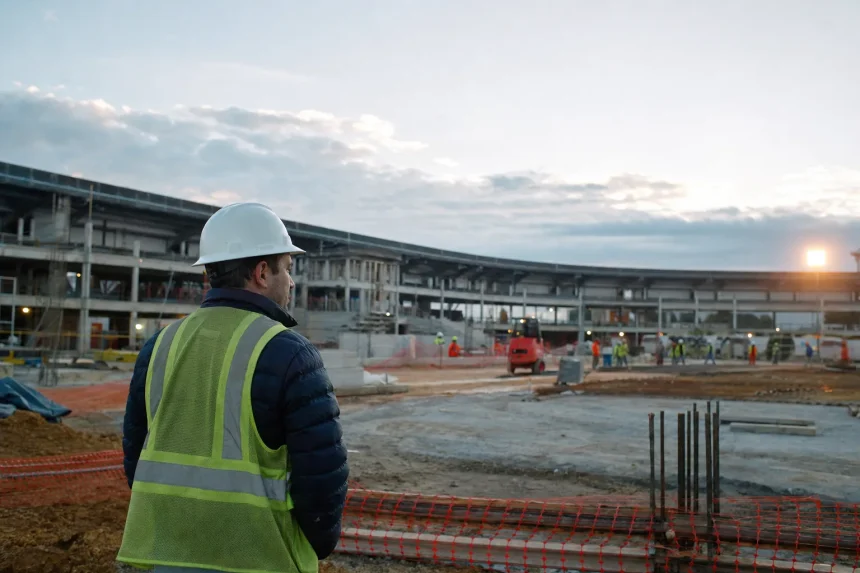
PowerChina has been selected as the main contractor for the transformation of El Campín stadium in Bogotá. The project will use an EPC model, bringing final technical studies, procurement and construction under one company.
One contractor for the full delivery chain
PowerChina will carry out the integral execution of the new sports venue under an Engineering, Procurement and Construction contract. The arrangement places final technical studies, the sourcing of supplies and the construction of the infrastructure within the same contractor’s scope. It also includes responsibility for hiring suppliers, acquiring and importing key inputs and materials, and handling contingencies linked to construction costs. For public buyers and bidders, the transferable feature of EPC is its concentration of interconnected delivery obligations in one company, rather than dividing engineering, purchasing and construction among separate primary contractors.
Experience cited in a complex project
The source describes PowerChina’s infrastructure experience as a factor considered in structuring a project of this scale and complexity. In Colombia, the company has participated in the execution of 10 solar parks, works at Hidroituango, wastewater treatment plants and hospitals. Internationally, its portfolio includes data centres, condominiums, hotels, universities and a stadium with capacity for 35,000 people in Angola, Africa. Those examples provide context for the contractor’s selection, although the source does not state the value of the El Campín contract or provide a timetable for completing the works.
Stadium capacity remains under study
The final capacity of the rebuilt stadium has not yet been settled. One option under review would raise the venue’s capacity to as many as 60,000 seats, above the initial proposals. The final number will depend on the completed architectural design and detailed engineering studies. This means the scope being delivered through the EPC arrangement is still subject to technical definition in an important area. The source reports the possible capacity, but does not say that 60,000 seats has been approved or that it represents the final design.
Responsibility for inputs and cost contingencies
The planned allocation gives PowerChina responsibility for obtaining materials and supplies, including imports, as well as for contingencies associated with construction costs. That concentration can make a single contractor the main point of responsibility for coordinating design decisions, procurement and physical delivery. It also makes the contract’s risk allocation important to bidders and buyers: the source identifies obligations assigned to PowerChina, but does not publish the detailed commercial terms, payment arrangements or mechanisms for managing changes. Those details would determine how the EPC model operates in practice.
| Fact | Detail |
|---|---|
| Contractor | PowerChina |
| Project | Transformation of El Campín stadium in Bogotá |
| Contract model | EPC: Engineering, Procurement and Construction |
| Colombian solar parks | 10 |
| Angola stadium experience | Capacity for 35,000 people |
| Possible new capacity | Up to 60,000 seats |
The EPC scheme concentrates engineering, procurement and construction in one company.
WHY IT MATTERS
An EPC contract combines engineering, procurement and construction in one primary contractor. In this case, PowerChina is also responsible for suppliers, imports of key materials and construction-cost contingencies, while the final stadium capacity remains subject to architectural and detailed engineering studies.
Reported from larepublica.co, 2026-09-25. The Tender Wire is published by Otnox.