

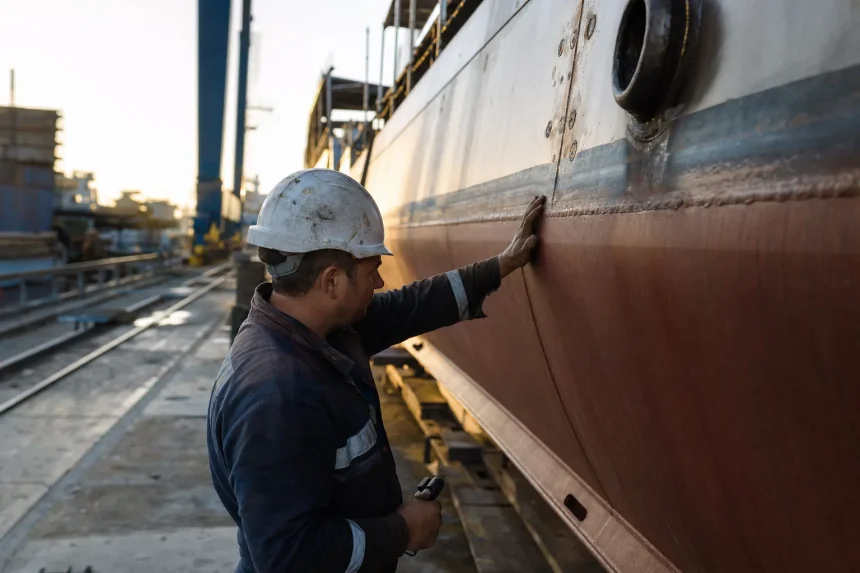
Rheinmetall acquired the Mangalia shipyard at the fifth auction on 9 October 2026, after four earlier attempts failed to attract a buyer. The sale followed a reduction in the starting price from €184m to €138m. The transaction is closely linked to Rheinmetall’s €920m contract for four military ships for Romania, to be built at the Mangalia site and financed through the SAFE programme.
Four auctions ended without a buyer
The sale of Damen Mangalia’s assets in one block began on 29 June 2026. Four auctions were then held at the initial market price of €184m, but each ended without a buyer. The process was repeated every month until the price was reduced. At the fifth auction, held on 9 October, Rheinmetall bought the shipyard for €138m, following a reduction of €46m. The sequence shows how a competitive sale can remain open after unsuccessful rounds, with the sale terms adjusted before another opportunity is offered to bidders. The source article does not identify any competing bidder or give details of the offers, if any, submitted during the earlier auctions.
The mechanism was a sale in one block
The procedure concerned the sale in one block of Damen Mangalia’s assets, rather than the award of a shipbuilding contract through the same process. In a block sale, the assets are offered together and a bidder generally competes for the package as a whole, rather than selecting individual items. Here, the initial auction price was maintained through four unsuccessful rounds before being reduced to €138m. A later auction then produced a buyer. For businesses, the transferable point is that repeated no-sale rounds can precede a revised auction, while the buyer’s commercial interest may depend on the wider use it can make of the acquired site.
The asset purchase sits alongside a SAFE contract
The shipyard acquisition followed Rheinmetall’s success in securing a €920m contract for four military ships intended for Romania. The vessels are to be built at the Mangalia shipyard, with financing through the SAFE programme. That contract and the asset auction are separate events, although the planned work helps explain the strategic importance of the site to the successful buyer. The reported facts establish the price, auction sequence and shipbuilding contract, but do not state the full terms of the acquisition, the identity of the seller, or whether other bidders made offers at the fifth auction.
| Fact | Value |
|---|---|
| First auction | 29 June 2026 |
| Auction that produced the sale | 9 October 2026 |
| Unsuccessful auctions at the initial price | Four |
| Initial market price | €184m |
| Price reduction | €46m |
| Sale price | €138m |
| Military shipbuilding contract | €920m for four ships |
Rheinmetall bought the shipyard at the fifth auction, after the price was reduced to €138m.
WHY IT MATTERS
The case separates two procurement mechanisms that can be connected in practice but should not be treated as one transaction: a competitive auction for a complete asset package and a contract for the construction of military ships. The auction reached a sale only after four unsuccessful rounds and a lower starting price. That sequence is relevant to bidders and contracting authorities because it shows how market participation, price-setting and the intended future use of an asset can shape a later competitive outcome.
Reported from zf.ro, 2026-10-11. The Tender Wire is published by Otnox.