

Vilnius municipality was aware in spring of financial difficulties at waste-management company Energesman and the risk that it might not meet its obligations, according to an LRT Investigation Department report. The parties nevertheless pursued a settlement under which Energesman would finance repairs to a fire-damaged waste-sorting and treatment plant. Contracts were terminated on 10 July, leaving the Vilnius region potentially responsible for restoring the facility.
A known risk was carried into a settlement
In May, the Vilnius region reached a settlement with Energesman after a fire had damaged the company’s waste-sorting and treatment plant. The agreement provided that Energesman would restore the facility at its own expense. By then, however, the company’s financial position was already difficult and its problems later deepened. Adomas Bužinskas, director of the Vilnius municipal administration, told LRT that the risks had been visible. He said the municipality had suspected that the company might struggle to manage the task, but chose to let the business rebuild the plant rather than immediately stop using its services.
The contracts ended before the repair obligation was fulfilled
The chosen approach was not sustained. Contracts with Energesman were terminated on 10 July, and the plant’s restoration then became a public-sector concern. The source reports that Energesman can no longer meet its obligations, meaning the burden may fall on the Vilnius region. The reported repair cost is at least several million euros, while a contractor competition is planned for October. The case illustrates a procurement risk that can arise after contract award: a buyer may continue with an incumbent that has known financial problems, but a later failure can shift unfinished performance and replacement work back to public bodies.
The fire disrupted waste treatment in Vilnius
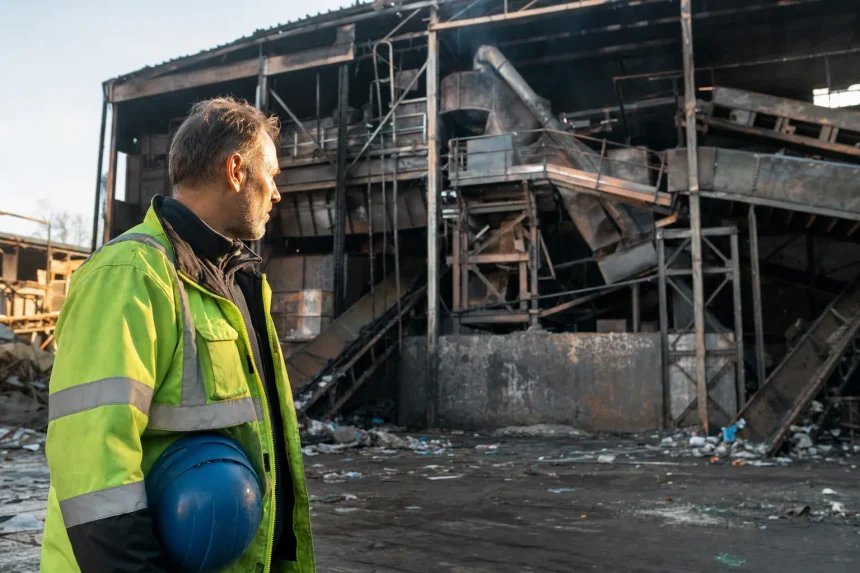
The underlying problem began with a fire at the Energesman-managed waste-treatment plant on Jočionių Street in Vilnius at the end of April last year. The flames were fought for about a day and destroyed around 7.5 thousand square metres of the building. The damage made it harder for Energesman to operate at the plant and contributed to what was later described as Vilnius’s waste crisis during the summer. The Vilnius regional waste-management centre, known as VAATC, has now taken over the MBA waste-treatment plant. Legal disputes between VAATC and Energesman are continuing.
What the mechanism means for future bidders and buyers
A settlement is a negotiated route for resolving a dispute or setting out how an obligation will be performed, rather than a fresh competition for the underlying service. Here, the settlement assigned the repair work to Energesman and relied on the company’s ability to pay for it. Once that capacity failed and the service contracts ended, the region faced the prospect of commissioning the work separately through a contractor competition. For procurement officials, the transferable issue is the need to connect contract continuation, financial resilience and performance security when deciding whether a troubled supplier can safely remain in place.
| Fact | Details |
|---|---|
| Financial risk known | The municipality knew in spring that Energesman might not meet its obligations |
| Settlement | Reached by the Vilnius region in May |
| Contracts terminated | 10 July |
| Planned contractor competition | October |
| Reported repair cost | At least several million euros |
| Fire damage | Around 7.5 thousand square metres of the building |
We had a suspicion that it might be difficult for them to manage.
WHY IT MATTERS
Continuing a contract with a financially troubled supplier can leave a public body exposed to unfinished obligations and replacement costs. The case shows why financial resilience and delivery safeguards matter when a buyer chooses to let an incumbent continue rather than end the relationship immediately.
Reported from lrytas.lt, 2026-09-09. The Tender Wire is published by Otnox.