


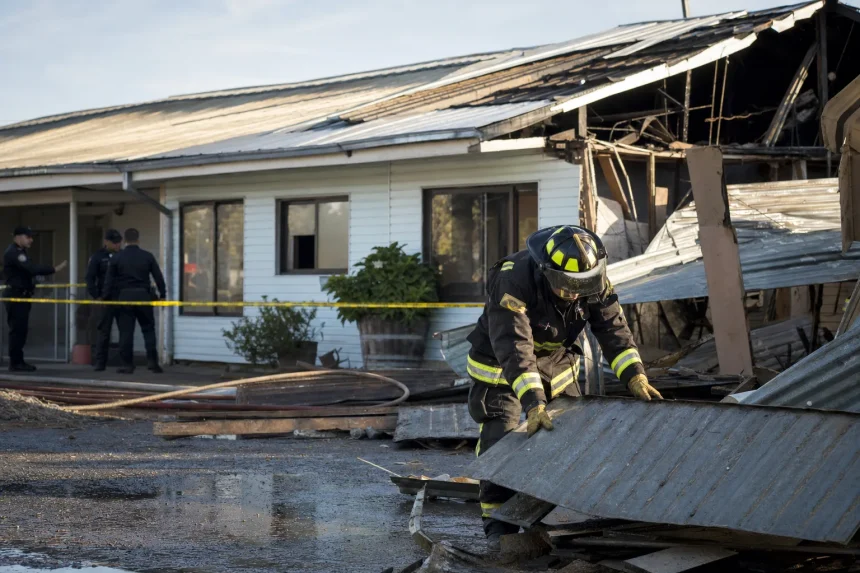
Sixteen older people died and ten others were taken to hospital after a fire at a care home in Pitrufquén, in Chile’s La Araucanía region. The municipality said the facility had legal observations about its operation, while health officials said it had been subject to a sanitary investigation, fines and repeated non-compliance since 2019. The facts raise questions about how warnings and inspections are followed through, including where care services may intersect with public purchasing.
A fatal fire at a lightly staffed home
The fire began on Friday night and continued into the early hours of Saturday at the single-storey care home, about 640 kilometres south of Santiago. There were 24 older people living there, and only one carer was present when the blaze started. Sixteen residents died, while ten survived and were transferred to the local hospital, according to Mayor Jacqueline Romero. Firefighters, police and assistance staff attended the scene. By morning, firefighters were collecting and clearing rubble and removing collapsed corrugated metal roofing, while police cordoned off the area for safety. The Fiscalía has opened an investigation into the origin and cause of the fire and whether third parties were involved.
Warnings and sanctions predated the blaze
Chile’s Regional Health Secretariat, known as the Seremi, had already identified deficiencies in the home’s operation. José Bravo, a Seremi official, said the establishment had been subject to a sanitary investigation since 2019, had been fined and was a repeat offender. Romero said the municipality sent a letter in February requesting a new inspection because the home did not comply with the regulations and had a sanitary case pending. These statements describe regulatory action and a request for further oversight, but they do not establish why the home continued operating, whether later corrective action was completed, or whether any public body had contracted for its services.
What the compliance trail means for buyers
The case illustrates a procurement issue without, on the available facts, proving a procurement breach. In care purchasing, an authority can use suitability and regulatory compliance checks before awarding work, and can require evidence that problems identified by an inspector have been corrected before services continue. A sanitary investigation, fine or request for reinspection is therefore relevant information for contract monitoring, but it is not by itself evidence that a provider should be excluded or that a contract was mishandled. The report identifies no contract, tender, award decision or finding against a buyer. The immediate responsibility for establishing what happened rests with the fire investigation and the authorities reviewing care homes.
Authorities promise wider review
President José Antonio Kast called for the facts to be established and said he had instructed urgent measures to review conditions in older people’s homes across Chile. The municipality expressed condolences to the families, while the mayor said officials had been providing support. The public record described by the authorities now contains several stages that will need to be separated: the reported operating irregularities, the earlier sanitary process and fines, the municipality’s February request for inspection, and the circumstances of the fire itself. Until the Fiscalía and relevant health authorities report further findings, the relationship between those matters remains unproven.
| Fact | Details |
|---|---|
| Deaths | 16 older people died |
| Residents | 24 older people were at the home |
| Survivors | 10 older people were taken to the local hospital |
| Prior regulatory history | The Seremi said the home had been under a sanitary investigation since 2019 |
| Municipal action | The municipality requested a new inspection in February |
| Location | Pitrufquén, in Chile’s La Araucanía region |
| Distance from Santiago | About 640 kilometres south of Santiago |
It was an irregular place; since 2019 it had been subject to a sanitary investigation, had been fined, and was a repeat offender.
WHY IT MATTERS
Regulatory warnings can become important evidence in care-service purchasing and contract monitoring, but they must be distinguished from proof of a procurement failure. This case shows why buyers may need a clear route from inspection findings to corrective action, reinspection and a documented decision about continued service. The source does not identify a public contract or establish wrongdoing by a procuring authority.
Reported from eleconomista.com.mx, 2026-09-12. The Tender Wire is published by Otnox.