

This piece explains what the proposed seasonal chain requirement would change for heavy transport operators, public buyers and road users.
A seasonal possession rule would become a conditional-use rule
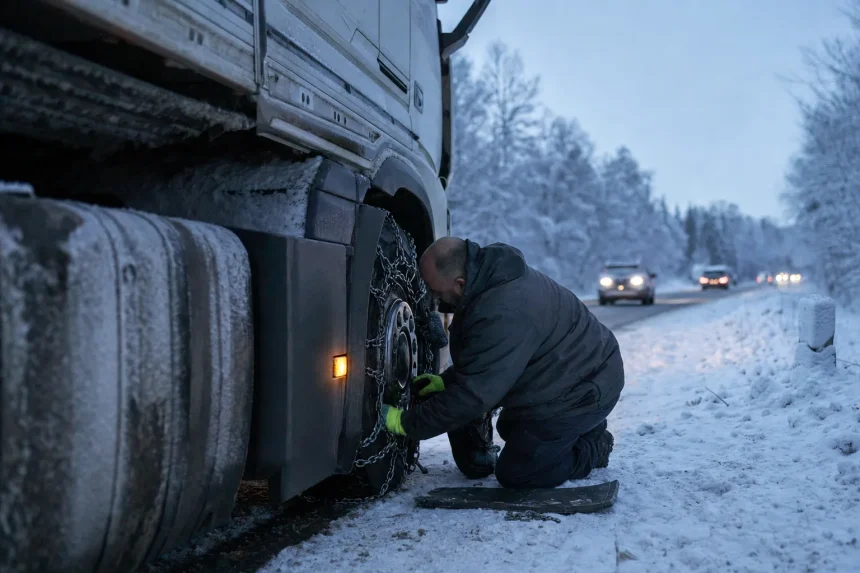
Lithuania’s Transport Ministry has proposed changing the road traffic rules so that M2, M3, N2 and N3 vehicles must carry snow chains from 10 November to 31 March. The chains would not be used continuously: the ministry says they would be fitted only when snow or ice, a slippery incline or inadequate grip made it unsafe to continue. This is a general regulatory requirement rather than a condition written into one individual contract. If adopted, it would set a baseline operating obligation for affected carriers, including operators whose vehicles work on passenger or freight services commissioned by public bodies.
Carriers say the practical conditions are not yet clear
The carriers’ association Linava says the ministry did not consult it before presenting the proposal. Its concerns centre on where a heavy vehicle could stop safely to fit chains, particularly if a bus has already stopped on a slippery incline. Linava argues that stopping in the carriageway could expose drivers and passengers to additional danger and create further disruption. The Lithuanian Passenger Transport Association has also called for the requirement to be advisory or excluded for public transport. Its head said one chain weighs 16 kilograms and raised concerns about safety, timetables and drivers’ working and rest-time rules.
The equipment would add a cost, but infrastructure is the larger issue
A set of chains for a lorry is listed at €500 in one online shop, while other options cost €1,500 or more. Linava says the expense is not the main objection; the missing infrastructure is. In its view, countries using similar rules provide stopping areas where chains can be fitted before dangerous sections. The association says Lithuania should first ensure timely clearing and gritting of slippery inclines, descents, bridges and viaducts. For procurement, the transferable point is that a new legal compliance obligation can affect bidders’ operating models even when a tender does not directly purchase the equipment.
The ministry has moved from restriction powers to equipment rules
The proposal marks a change from the ministry’s earlier position. In January, it said there was no need to require chains because road owners could already restrict, suspend or close traffic in situations threatening safe movement, including extreme weather. The ministry now says chains could reduce the risk of winter disruption and that police could potentially control compliance. It also says the aim is to build driver awareness rather than punish operators. Associations point to different approaches abroad, including chain requirements in Norway and tread-depth rules in Sweden, but those comparisons do not establish that the Lithuanian proposal would work without suitable stopping places.
IN NUMBERS
The proposal has not yet resolved the central implementation question: whether heavy vehicles can fit chains safely and legally when conditions deteriorate. Its final effect on carriers, passenger services and publicly commissioned transport will depend on the wording adopted and the infrastructure available on the roads.
Reported from lrt.lt, 2026-09-12. The Tender Wire is published by Otnox.