
Victoria’s royal commission is examining the state’s building industry and the CFMEU’s links to public infrastructure projects. Hearings this week focused on testimony from former CFMEU health and safety official Joel Leavitt, while proceedings were delayed to assess late-tendered evidence.
A public project becomes a case study
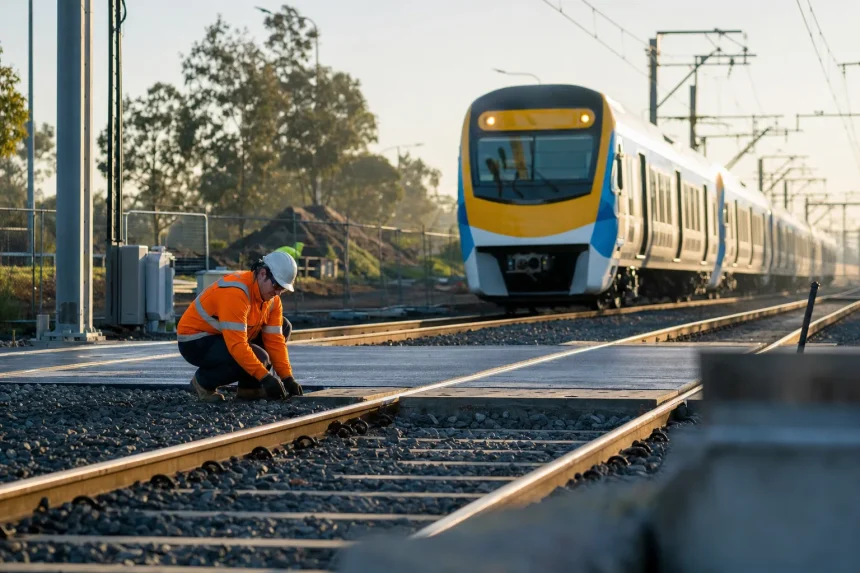
The Royal Commission into the Integrity of Major Public and Civil Infrastructure Construction Projects is using the Gap Road level crossing removal as a case study. Its stated focus is the CFMEU’s ties to Victoria’s Big Build, within a wider investigation into corruption in the state’s building industry. The source does not describe a new contract award, a bid evaluation or a finding against a supplier. Instead, it shows how a public infrastructure project can be examined as part of a broader inquiry into relationships and conduct connected with government-funded construction.
What the commission is examining
The procurement issue in this account concerns the integrity of major public construction, rather than the technical terms of the Gap Road contract. A royal commission can select a project as a case study and hear evidence about the people and organisations connected with it. That makes the project a route into wider questions about the building industry and its links to the state’s Big Build. The source does not establish that any procurement process was corrupted, and the commission’s investigation should not be treated as proof of wrongdoing.
Testimony about a rail-line shutdown
Joel Leavitt, described as a member of the outlaw Bandidos gang and a former CFMEU health and safety official, gave evidence this week. He said he could not recall sending a text message that boasted about costing Victorian taxpayers $500,000 after CFMEU members shut down a rail line during a Covid-19 protest. The passage reports the testimony and the alleged contents of the message, but does not say that the message was authenticated or that the allegation has been proven. Leavitt’s evidence forms part of the commission’s ongoing examination.
Late evidence delayed the hearings
Before Leavitt’s testimony, hearings were delayed on Monday while a large volume of late-tendered evidence was sifted. In this setting, late-tendered evidence means material put forward after the expected timetable, requiring consideration before the hearing can proceed. The source gives no detail about who tendered the material, what it contains or whether it will be admitted or relied upon. The episode illustrates a procedural feature of public inquiries: evidence relevant to a major infrastructure investigation may need to be assessed before witnesses are heard.
| Fact | Detail |
|---|---|
| Inquiry | Royal Commission into the Integrity of Major Public and Civil Infrastructure Construction Projects |
| Location | Melbourne’s Magistrates’ Court |
| Case study | Gap Road level crossing removal |
| Witness | Joel Leavitt |
| Former role | CFMEU health and safety official |
| Amount mentioned in testimony | $500,000 |
| Procedural development | Hearings were delayed to sift through a large volume of late-tendered evidence |
The Gap Road level crossing removal is being used as a case study to investigate the CFMEU’s ties to Victoria’s Big Build.
WHY IT MATTERS
For public buyers and bidders, the case shows that scrutiny of major infrastructure can extend beyond the contract award to relationships, conduct and evidence connected with delivery. The source reports an investigation, not a proven procurement breach.
Reported from themandarin.com.au, 2026-11-18. The Tender Wire is published by Otnox.