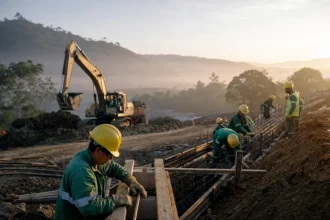



The case examines when a public body may continue paying a private contractor while the company’s ownership, directorship and control are disputed.
Petition targets payments under disputed tender
Busia Senator Okiya Omtatah has moved to Kenya’s High Court seeking an order to stop further government payments to Savola Investment Limited under a multibillion-shilling Affordable Housing project. The payments relate to Tender No. MLPWHUD/SDHUD/ESP/213/2023-2024, identified as Cluster 19. Omtatah wants the Ministry of Lands, Public Works, Housing and Urban Development to withhold money until Savola’s ownership, directorship and control have been conclusively established. His application seeks to cover payments to Savola, or to any person, account or entity operating under the disputed tender.
Ownership dispute is central to the claim
Omtatah argues that the government should not process or disburse public funds while Savola’s true ownership, directorship and control remain contested. He is asking for a current CR12 from the Registrar of Companies confirming the company’s undisputed lawful directors before payments resume. A CR12 is a company registry record used here to establish who is formally recognised as directing the supplier. The senator says continued payment could conflict with constitutional principles on public finance, transparency, accountability and procurement. These are claims made in his petition and have not been determined by the court.
The legal issue reaches beyond one supplier
The petition cites Articles 10(2)(b) and (c), 47(1), 201(a), 201(b)(i) and (d), 226(5) and 227(1) of Kenya’s Constitution. It also relies on Section 68 of the Public Finance Management Act, 2012, Regulation 96 of the Public Finance Management (National Government) Regulations, 2015, and Section 45 of the Public Procurement and Asset Disposal Act, 2015. The broader procurement question is whether a contracting authority can safely continue performance and payment when the legal identity or control of the awarded company is challenged. The court’s decision may clarify how such verification concerns affect payments after tender award.
No ruling has yet been made
Omtatah is asking the High Court to declare that the ministry has an obligation to protect the public interest by withholding further payments until the ownership feud is resolved. He also wants the court to find that processing or disbursing funds in the circumstances violates, or threatens to violate, the cited constitutional provisions and laws. The case is pending hearing, so the petition does not establish that Savola’s ownership or directorship is unlawful, nor that the ministry has acted improperly. The court will determine whether the requested payment restrictions and declarations should be granted.
IN NUMBERS
The case places a familiar contract-management safeguard at the centre of a major public project: confirming that the entity being paid is the entity that lawfully holds the tender and can receive public funds. Until the High Court hears the matter, the allegations remain unproven and no order stopping payments has been reported.
Reported from standardmedia.co.ke, 2026-09-08. The Tender Wire is published by Otnox.