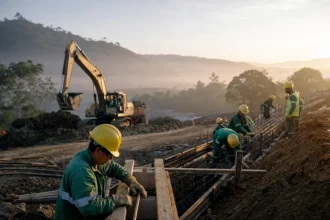


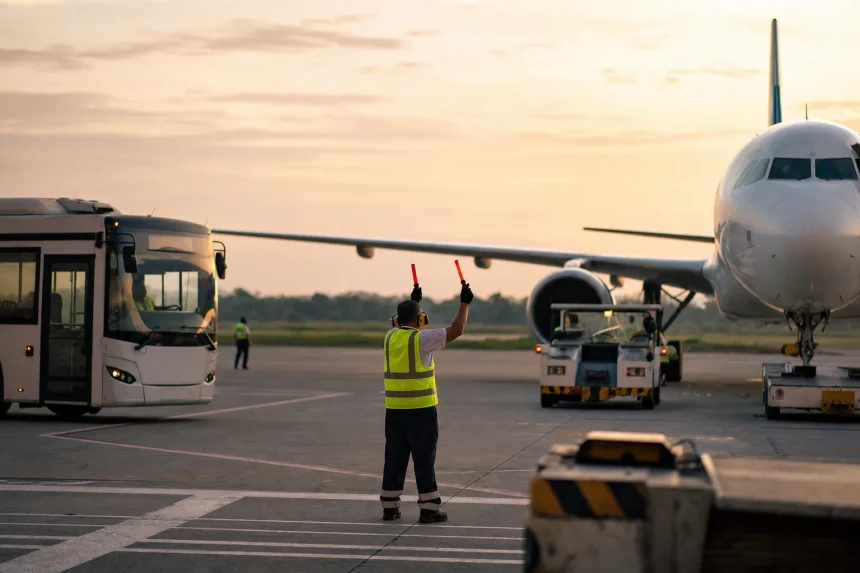
Panama’s Tocumen International Airport is planning a sharp increase in capital spending as it prepares for higher passenger volumes and expanded aircraft-handling capacity. Its proposed 2027 budget is $526.5 million, up from $386.7 million approved for 2026, while infrastructure investment is set to rise from $111.1 million to $225.6 million. The programme includes a major southern pier, flight-field expansion, Terminal 1 modernisation, runway works and baggage-system upgrades. The projects are being presented as a procurement pipeline rather than as completed awards, giving suppliers visibility of several large packages and of the airport’s stated capacity requirements.
A larger capital programme follows passenger growth
Tocumen expects to close 2026 with approximately 23.1 million passengers and to handle 25.4 million in 2027, an increase of 2.3 million travellers in a year. The airport’s general manager, José Ruiz Blanco, said the higher investment would allow Tocumen to anticipate the capacity required for passenger and operational growth. Infrastructure will account for 42.8% of the total 2027 budget, compared with 28.7% in 2026. Operating costs are also planned to rise, reaching $300.9 million from $275.6 million, while personnel services remain at $53.8 million. The figures describe the airport’s proposed spending plan, not completed construction or awarded contracts.
Muelle Sur is the largest identified package
The Muelle Sur project has a reference price of $208.75 million and is intended to connect with Terminal 2. The planned structure includes ten contact boarding gates, four rooms for remote positions and a platform for moving passengers by bus. Works cover around 21,097 square metres across three levels, as well as a new apron, taxiways, lighting, drainage and fuel systems. The scheme would also reconfigure positions 220, 221 and 222. Its estimated construction period is 30 months, followed by 12 months of maintenance. A reference price sets the buyer’s stated benchmark for a procurement, while the eventual contract value depends on the tender process and compliant offers.
The pipeline combines construction, maintenance and design
A separate project covers the study, design, construction and maintenance of an expanded flight field, with an estimated investment of $98 million. It includes runways, aprons, taxiways and eight remote positions near the northern pier of Terminal 1. Those positions are planned for code C aircraft such as the Boeing 737, with compatibility for code E aircraft such as the Boeing 777. The estimated delivery period is about 27 months, followed by 12 months of maintenance. Tocumen also plans a tender for the comprehensive modernisation of Terminal 1, with a reference price of $22.2 million. The structure shows how airport procurement can bundle lifecycle responsibilities rather than focus only on initial construction.
A wider portfolio supports capacity across the airport
Tocumen is continuing the rehabilitation of its two runways and taxiways under a $56.9 million project that is 75% complete. A further $12 million is planned for phases four and five of the baggage-handling system. Once the proposed expansions are complete, the airport is expected to have 64 boarding bridges and 20 remote positions, providing 84 aircraft spaces across its terminals and aprons. Twelve strategic projects will account for $143.2 million, or 63% of planned infrastructure investment. Another $13.5 million will fund eleven interventions at regional airports, while the full portfolio contains 86 projects managed by Tocumen S.A.
| Fact | Value |
|---|---|
| 2027 total budget | $526.5 million |
| 2027 infrastructure investment | $225.6 million |
| Muelle Sur reference price | $208.75 million |
| Flight-field expansion estimate | $98 million |
| Runway rehabilitation project | $56.9 million |
| Expected 2027 passengers | 25.4 million |
| Full Tocumen project portfolio | 86 projects |
The increase in investment will allow Tocumen to anticipate the airport capacity required by passenger and operational growth, its general manager José Ruiz Blanco said.
WHY IT MATTERS
For bidders, the plan signals a substantial pipeline in which airport works may be procured as distinct construction packages or as contracts combining study, design, construction and maintenance. The stated reference prices and delivery periods indicate the scale and lifecycle obligations that future tender documents may need to address, while the regional-airport allocation shows that opportunities extend beyond the main terminal.
Reported from infobae.com, 2026-09-11. The Tender Wire is published by Otnox.